Okay, let’s dive into what actually goes down when you compare a folding house vs. a traditional stick-built one—especially from someone who’s actually on the supplier side of folding homes. Let’s keep it real, no stuffy jargon, no AI fluff, just the kind of chat I’d have over a coffee with a contractor or a client who’s legit curious. Folding House
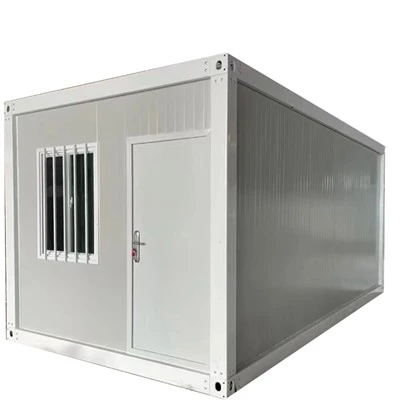
First off, let’s cut to the chase: I’ve been supplying folding houses for a little over four years now, and 9 out of 10 folks who reach out are either sick of waiting 6+ months for a traditional build, or they want something that’s not stuck to one patch of dirt forever. But let’s not act like folding homes are a “better in every way” deal—they have super clear pros, and some not-so-obvious cons, so I’m gonna lay it all out like it is.
Let’s start with the big one: time. Traditional houses, even a tiny 2-bed, take at LEAST 4-6 months just from breaking ground to moving in. Wait, no—actually, most of our clients tell me their last traditional build took 8 months because of weather delays, supply chain issues, or a plumber bailing last minute. Folding houses? We can get them to your site in 2 weeks max, and set up in half a day. I’m not exaggerating—last spring we did a 3-bed model for a family in Oregon who needed a place fast because their rental got sold. They had it delivered on a Tuesday, were sleeping in it by Wednesday night. Compare that to a traditional build, where you’re renting a hotel room for months, paying for both that and storage, and that extra time adds up to thousands in hidden costs. But hold on—traditional homes have that on-site customization that folding ones don’t, right? Wait, no—we actually let clients tweak layouts a lot more than most people think. But we can’t change the entire footprint after it’s built, whereas traditional lets you add a sunroom or a new wall whenever, like.
Next, cost. Let’s talk numbers, because that’s what everyone cares about. A basic 2-bed traditional house (1,200 sq ft) in the US right now is averaging $150-$200 per sq ft, so that’s $180k-$240k, not including land or utilities. A similar size folding house is $80-$120 per sq ft, so $96k-$144k. That’s a huge gap, but wait—people always forget the hidden costs. Traditional builds have permit fees that add up, inspection delays, material markup, and that rent we talked about earlier. Folding houses? Most come pre-approved for zoning in most counties now (we work with local officials to make sure they’re up to code), so permits are usually 1/3 the cost. But here’s the catch: if you want to add a basement or a garage to a traditional home, that’s easy. For a folding house? You can add a small deck or a storage unit that folds out, but a full basement is basically impossible. We can hook up utilities like electric, water, and sewer the same way traditional does, but you can’t dig under a folding house like you can a stick-built one.
Then there’s mobility—this is where folding houses blow traditional ones out of the water, but it’s not for everyone. Traditional homes are rooted to the ground; you can’t pick up a 2,000 sq ft house and move it without demolishing it, basically. Folding houses? Our models are designed to be transported on standard flatbed trucks, so if you need to move for a job, or if your land isn’t working out (like if you found a better spot), you can disassemble and move it in a day. Last year we had a client in Texas who bought land in Houston, then a year later got a job in Austin, so they moved their folding house 180 miles. No demolition, no new build, just disassemble, transport, set up. But wait—mobility only works if you plan for it. If you want a permanent “forever home,” a folding house has to be anchored really well for high winds or earthquakes, so you’re not moving it every 10 years. Also, moving it does cost money—usually $1,500-$3,000 depending on distance, so it’s not free.
Now, durability—this is the part where a lot of people have misconceptions. Some folks think folding houses are flimsy, like a tiny home that falls apart in a storm. No way. Our folding houses are made with steel frames, double-paned insulated windows, and the same type of siding as traditional homes—vinyl or fiber cement. They’re tested to withstand wind speeds up to 120 mph, which is the same as a lot of traditional stick-built homes (especially if you don’t build to hurricane codes). But wait—traditional homes have stood for 100+ years, right? Folding houses have only been around for about 15 years as a mainstream option, so we don’t have that 100-year track record. But the materials we use are high-quality, and most manufacturers (including us) offer a 10-year structural warranty, which is on par with a new traditional home’s warranty. Also, maintenance: folding houses have less exterior surface, so less painting, less roof to repair. A traditional home’s roof needs replacing every 15-20 years; a folding house’s roof is a modular panel that you can replace in a few hours, not a whole new roof. But the interior of a folding house—if you damage a wall, it’s a modular panel, so you replace that, not a whole section of drywall.
Wait, let’s talk about size and layout. Traditional homes can be any size, any layout—open floor plans, formal dining rooms, giant master suites. Folding houses: most are modular, so their footprint is fixed when folded. For example, our base 2-bed folds down to 8 ft wide for transport, and expands to 32 ft wide when set up. So layouts are flexible within that expanded space, but you can’t have a 40 ft wide great room, because that would be too big to transport. Also, square footage: traditional homes can be 1,000 sq ft to 5,000+, even bigger. Our biggest folding house is about 1,800 sq ft, which is perfect for a small family, but if you need a larger home, you’d have to link multiple folding houses together, which is doable but not as seamless as a traditional open floor plan.
Utilities and living comfort: This is where both are pretty similar. Folding houses have HVAC systems, hot water heaters, same electrical and plumbing as traditional homes. We insulate them really well—R-30 in walls, R-50 in ceiling—so they’re energy efficient, similar to a well-built traditional home. A lot of our clients say their utility bills are actually lower because of better insulation. But here’s a thing: traditional homes have better airflow if you build them right, with proper ductwork that’s designed for open spaces. Folding houses, since they’re more compact, can have less airflow if you don’t install the HVAC correctly—we train all our clients on how to adjust vents, so that’s not an issue, but it’s something to consider.
Now, who’s a folding house a good fit for? People who need fast housing, small families, remote workers who want a home that’s easy to move (like someone who works in oil and gas and transfers every few years), or folks on a tight budget who don’t need a massive home. Who’s traditional better for? People who want a permanent forever home, need a large layout or basement, or who like to customize every little detail (like building a home around a specific tree, or adding a custom fireplace).
I should also mention common mistakes people make when looking at folding homes. A lot of folks see “tiny home” and think folding houses are for vacation cabins only—no, we have models that are year-round, habitable in cold climates (we sell a lot in Minnesota, where they’re built to handle snow loads). Another mistake: not checking zoning laws. A lot of rural areas allow folding houses as permanent residences, but some cities have weird zoning that classifies them as temporary structures, so you have to do your homework. We help our clients with that, by the way—we’ve got a team that checks zoning for every project before we even deliver.
Wait, let’s go back to cost for a sec, because I want to make this clear. A lot of people think “folding house is way cheaper” but that’s only if you compare a similar size. If you want a 4,000 sq ft home, folding is probably not cheaper, because you have to link multiple units. Also, land: both need land, but a folding house might need a smaller pad, since it’s pre-built, whereas traditional needs more space for on-site construction.
Another point: waste. Traditional construction generates a TON of waste—wood scraps, concrete, packaging, all that stuff that gets hauled to landfills. Folding houses are built in a factory, so almost all materials are cut to size, almost no waste. That’s a big selling point for eco-conscious clients, which is a lot of our business now.
Let me wrap this up. The key takeaway here is that neither is “better”—it’s about what you need. If you want to move fast, save money, have a flexible space, and don’t need a massive forever home, folding house is a no-brainer. If you want a permanent, huge, totally custom home, traditional is still the way to go.

But hey, if you’re still on the fence, that’s why we’re here. We don’t pressure anyone to buy—we just give you the facts, help you figure out what fits your needs. If you’re curious about pricing, or specs, or zoning help, hit us up to discuss your project.
Folding House References:
- U.S. Census Bureau. (2023). New Single-Family Home Construction Costs. Retrieved from census.gov
- International Code Council. (2022). Modular and Transportable Residential Building Standards. Retrieved from iccsafe.org
- National Association of Home Builders. (2023). Home Maintenance Cost Comparison. Retrieved from nahb.org
Jiangsu Suqian Longze Modular Construction Co., Ltd.
As one of the most professional folding house manufacturers and suppliers in China, our products have good reputation in the market. Please feel free to buy high quality folding house at competitive price from our factory. We also accept customized orders.
Address: No. 8, Weisan Road, Shuanggou Town, Sihong County, Suqian City, Jiangsu Province, China
E-mail: Lzmk88888888@163.com
WebSite: https://www.expandablehousefactory.com/
