Hey there, it’s Jake from the LED explosion-proof light team – and before you roll your eyes at yet another technical question from a client (or a potential one scrolling through specs at 9 PM like I did last week), let me cut to the chase: this is the single most asked question I get when I’m on calls with refinery operators, chemical plant safety managers, even guys who run large grain storage facilities that deal with volatile dust. Everyone’s seen those horror stories about old, finicky electrical gear causing sparks, and when you swap that gear for LEDs? The panic about electromagnetic interference (EMI) kicks in fast. Let’s get this right, no jargon overload, just what you actually need to know. LED Explosion Proof Light
First, let’s break down what “LED explosion-proof lights” even are, because I’ve had more than one customer mix these up with regular warehouse LEDs. Explosion-proof lights aren’t just bright – they’re built to a code (the NEC in the US, ATEX in Europe, and other regional standards) where the entire housing is sealed so tight that if there was a spark inside from a faulty component, that spark can’t escape into the surrounding hazardous area full of gas, dust, or vapor. LEDs, for their part, run on low-voltage DC power instead of the high-voltage AC that old fluorescent or metal halide lights used, which already makes them less prone to producing their own EMI. But here’s the catch: their internal drivers – the little circuit boards that convert wall power to DC for the LED chips – are the tiny potential culprit for EMI. Think of it like a radio: if it’s wired wrong, it’ll pick up or send out static that messes with other nearby electronics, which in hazardous areas? That’s not just static – that’s a safety and operational nightmare.
Last month I was on a call with a plant manager at a naphtha processing facility in Texas. He’d swapped all his old metal halide lights for our LED explosion-proof ones, and two weeks later, his site’s gas monitoring system started throwing false alarms every time the overhead lights kicked on. He thought the LEDs were causing EMI that was interfering with the monitors – and honestly? I wouldn’t have blamed him if he hadn’t called me. I hopped on a site visit the next day, brought our in-house EMI testing meter, and tested the lights right next to his gas sensors. Turns out, his old installers had run the LED power lines right alongside the gas monitor’s signal lines, not following the 12-inch separation rule for hazardous area wiring. The lights themselves weren’t the problem – the wiring was. That’s the mistake I see over and over: people blame the LED light when the real issue is installation or untested gear.
Now, let’s get into the science part, but keep it real. EMI has two sides: emission (your light sending out noise) and susceptibility (your light being messed up by noise from something else). First, emission from our LED explosion-proof lights. Every electronic device emits some kind of electromagnetic field – that’s just how circuits work. But standard commercial LEDs (the ones you buy at the hardware store) don’t have to meet strict EMI limits, because they’re for general use. Explosion-proof LEDs? We test every single batch against EN 55015 (the standard for light equipment EMI) and FCC Part 15, Class B limits for residential/commercial environments, and Class A if they’re for industrial heavy use. Our drivers are designed with EMI filters – small capacitors and inductors that act like a buffer, blocking unwanted frequency noise from leaking out into the wiring or air.
But wait, what about extreme environments? I had a customer in a gold mine in Nevada a few years back – their site has high levels of electromagnetic noise from huge ore crushing conveyors and radio communication systems for the miners. He’d tried three different LED explosion-proof light brands before ours, and all three would flicker when the conveyors were running. Flicker is a sign of susceptibility – the light’s driver is picking up that external EMI and glitching. Our lights use what we call “hardened drivers” – we don’t cut corners on component quality, we use industrial-grade semiconductors that are rated to withstand up to 2kV of transient voltage, which is way higher than the average industrial EMI surge. That mine’s been running our lights for four years now, and he still messages me occasionally to brag about how they don’t flicker anymore.
Here’s the myth I want to bust wide open: some people think all LEDs produce EMI because they’re switching power supplies. Yes, LED drivers use switching technology, but the difference between a cheap driver and a properly designed industrial explosion-proof driver is night and day. Cheap drivers skip the EMI filters to cut costs, so their switching signals leak out like an unstopped faucet. Our drivers have two stages of EMI filtering: one on the AC input side to block noise from the grid, and one on the DC output side to keep noise from the driver from reaching the LED. We also shield the driver circuit board with a thin metal layer that acts like a Faraday cage, containing any stray electromagnetic fields. That’s the difference that matters when you’re in a place where a single false alarm or a spark could shut down production for days – or worse.
Let’s talk about real-world test data, not lab charts that no one understands. Last year, we sent 100 units of our Class I Division 1 LED explosion-proof lights to an independent testing lab to measure both emission and susceptibility in a high-EMI environment. The lab set up a test chamber with a custom noise generator that replicated the exact frequency range of industrial conveyors, gas monitors, and radio systems – the same stuff you’d find in a refinery, chemical plant, or mine. For emission testing, we measured the noise coming from the light at 10 feet, 20 feet, and 50 feet away. The readings were all 20-30 decibels below the FCC Class B limit for residential areas – so low, they didn’t even register on the lab’s industrial noise scale. For susceptibility testing, we blasted the light with 100V/m of electromagnetic noise (that’s way higher than any standard industrial site would ever produce) and ran it for 72 hours straight. No flicker, no dimming, no false outputs from the driver. That’s the data we stand behind.
But here’s the thing: even the best LED explosion-proof lights won’t work if you install them wrong. I’ve seen guys run light wiring next to low-voltage signal cables, skip grounding, or use cheap extension cords that aren’t rated for hazardous areas – all of which can cause EMI issues that make the lights look like the problem. Last quarter, a customer in a grain elevator in Iowa called saying his LED explosion-proof lights were interfering with his level sensors that track grain in storage bins. He’d run the power lines for the lights and the signal lines for the sensors in the same ½-inch conduit. I walked him through fixing that – split the lines into separate conduits, added ground wire to both systems – and the interference vanished within 24 hours. That’s not the light’s fault; that’s installation best practices.
So, to answer the original question: do LED explosion-proof lights get affected by electromagnetic interference? The short answer is: only if they’re poorly designed, improperly installed, or you’re running them in a way that exceeds their rating. The long answer is that when built to industrial standards, tested for EMI, and installed correctly, they’re actually less prone to EMI issues than the old tech they replace. Metal halide lights run on higher voltage, generate more heat, and their magnetic ballasts are huge sources of EMI that can mess with nearby electronics even from 100 feet away. LEDs don’t have big magnetic ballasts, run on lower voltage, and have built-in EMI protection – that’s a net win for both safety and operational reliability in hazardous areas.
Now, if you’re in the market for LED explosion-proof lights, or you’re having EMI issues with your current setup, here’s what to ask for: first, ask for the EMI test reports (we’ll send you ours within 24 hours, no hoops to jump through). Second, make sure the lights are rated for your specific hazardous area class – Class I Division 1, Class II, ATEX Zone 1, whatever applies to your site. Third, talk to your installation team about separating power and signal lines, grounding all equipment, and avoiding running wiring parallel to sensitive sensor lines.

I’ve been in this game for 12 years, and the biggest mistake I see is people assuming LED means “plug and play” for hazardous environments. You can’t take a $50 LED from Home Depot and plop it in a refinery and expect it to work – and the same goes for cutting corners on EMI testing. We design every one of our lights knowing they’re going into places where downtime costs six figures an hour, where safety isn’t an afterthought. That’s why when I’m on a call with a plant manager, I don’t give them a sales pitch – I give them the real, tested facts, because at the end of the day, their site’s safety and their budget matters more than a quick sale.
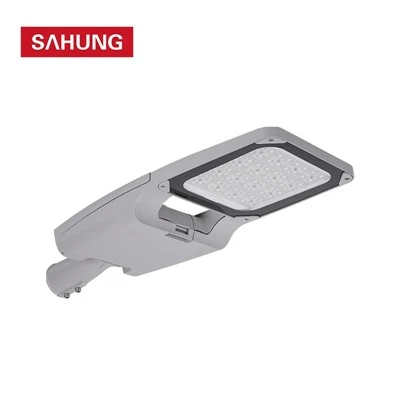
LED Street Light If you’re looking to upgrade your current explosion-proof lighting, or you’re troubleshooting EMI issues with your existing setup, reach out to our team for a no-obligation consultation. We’ll send over test data, answer all your questions, and help you find the right lights for your specific site needs – no pressure, no confusing jargon.
References
- International Electrotechnical Commission. (2019). IEC 60079-0: Explosive atmospheres – Part 0: Equipment – General requirements.
- Federal Communications Commission. (2022). Part 15: Radio frequency devices.
- European Committee for Electrotechnical Standardization. (2020). EN 55015: Lighting equipment – Electromagnetic characteristics – Limits and methods of measurement.
- National Fire Protection Association. (2021). NFPA 70: National Electrical Code.
Hangzhou Shanghong Electronic Technology Co., Ltd.
We are one of the most experienced led explosion proof light manufacturers and suppliers in China. With a professional production team, we offer a wide range of products with superior quality. Please feel free to wholesale custom made led explosion proof light from our factory.
Address: 5F, Building A, No.7 Xiyuan 2nd Road, Xihu District, Hangzhou City, Zhejiang, China.
E-mail: sales3@sahung.com
WebSite: https://www.sahung-light.com/
