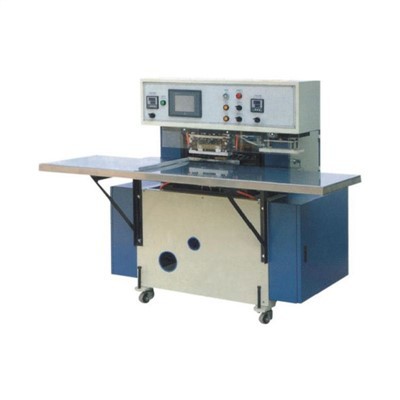
Hey there, it’s Jake from the bag making machine team here—been in this game for 12 years, answering the same question at least three times a week: “Can your bag making machine make food-grade bags?” Let’s cut through the noise, because it’s not a straight yes or no. It’s about four big things, and I’ve walked a dozen snack and frozen food manufacturers through this process, so I’m talking real shop floor stuff, not textbook jargon. Bag Making Machine
First, let’s break down what “food-grade bags” actually means. Most new buyers think it’s just plastic that’s safe to hold chips or frozen veggies, but there’s way more to it. The FDA and EFSA don’t just check the final bag—they check every single material that touches it along the production line, and even the additives that go into the plastic film. Then there’s performance: a food-grade bag for a bakery has to hold up against condensation; one for a pickled veggie jar needs to seal tight to keep bacteria out. So it’s not just safety—it’s functional safety for the product, which is non-negotiable.
Now, can a standard bag making machine do this? Short answer: not off the shelf. Let’s be real—most of our entry-level bag machines are set up for run-of-the-mill retail trash bags or generic shipping bags. Those use LDPE (low-density polyethylene) with cheap slip agents, and the machine’s cutting blades and rollers are just steel, no fancy treatments. But here’s the thing: every machine we build can be retrofitted or customized to make food-grade bags. That’s the sweet spot most competitors skip—they act like food-grade is a whole separate machine line, but that’s just not true.
Let’s start with the most critical part: the film handling. Food-grade bags start with food-grade film, right? But if your machine’s rollers are made of regular steel, they can rub off tiny metal shavings into the film—stuff that gets FDA red-flagged. So the first customization: food-grade roller coatings. We use FDA-approved EPDM rubber or hard chrome plating for all contact parts—no more metal flaking. And then there’s the tension control. Food-grade film is usually thinner than industrial film, so too much tension will stretch it out of shape, too little will cause wrinkles that break the seal. Our mid-tier machines have closed-loop tension sensors that adjust in real time, which was a game-changer for a craft granola brand we worked with last year. They were wasting 15% of their film on their old machine, and now it’s down to 2%—that’s real savings, plus no risk of seal failures that get their products rejected at the warehouse.
Next up: the slitting and cutting system. Regular bag machines use sharp steel blades that can leave micro-tears along the bag edges, where food can seep in if it’s a resealable bag. For food-grade, we use ultrasonic cutting or heated precision blades that seal as they cut—so no gaps, no metal shavings, and a tighter edge that works better with resealable zippers. I remember a frozen fruit producer coming to us last year—they’d been using a machine that left tiny cuts in the bag, and half their stock was getting freezer burn because air was getting in. After we swapped out their blades for our ultrasonic system, that problem vanished. Now their monthly waste from seal issues is down by 40%, and they just doubled their production line.
Wait, let’s not forget about additives and in-line printing, because that’s a huge blind spot for a lot of buyers. If your machine prints directly on the bag, the ink has to be food-grade too—but if the machine’s printing deck is set up for regular solvent-based ink, those can leach into the food. So we work with every customer to specify either water-based food-grade ink systems or UV-cured inks that meet FDA standards. And for the resin itself? We have a list of approved, food-grade LDPE, HDPE, and even biodegradable resins (like plant-based PLA) that work seamlessly with our machines, no special adjustments needed. The key here is that the machine doesn’t come pre-programmed for only one resin type—our machines have modular controls that let you switch between regular and food-grade films in under 10 minutes, if you need to. That’s a big deal for small food brands that might test new products seasonally, like a hot sauce company that switches from plastic bags to compostable ones for summer.
There is one big caveat here, though: if you’re trying to make food-grade bags for extremely sensitive products, like raw meat or baby food, you need an extra layer—oxygen and moisture barriers. Those are usually co-extruded films, and that requires a machine with more precise layer alignment. Our high-end co-ex bag making machines handle that perfectly, with six-layer film capacity and real-time layer thickness monitoring. We did a project with a local meat processing plant last quarter, and their old machine couldn’t align the barrier layers evenly, so they were getting inconsistent shelf life (one batch of ground beef was going bad in 10 days, another in 25). After upgrading to our co-ex machine, all batches hit the 30-day shelf life mark, and their food safety audits haven’t had a single note about packaging in 6 months.
A lot of people ask me if it’s worth retrofitting an old machine instead of buying a new one. The short answer is: sometimes, but most of the time, it’s not. Retrofitting a 10-year-old machine with food-grade rollers and ultrasonic blades might work, but old machines don’t have the precision controls or sanitation features that food production lines need. Let’s say you have a machine that’s 15 years old—it doesn’t have CIP (clean-in-place) capabilities, which is mandatory for food facilities. You’d have to take it apart to clean every part, which adds downtime and labor costs. Our new machines are built with smooth, easy-to-disassemble parts, and many have CIP-compatible designs that cut cleaning time from 2 hours to 20 minutes. That’s huge for a food plant that runs 24/7 and can’t afford downtime between production runs.
I want to be clear here: this isn’t just theory. We’ve got clients in every food niche—craft snacks, frozen produce, baked goods, even pet food (which has similar food-grade standards) — all using our machines to make their own packaging. One small-batch popcorn brand we started working with two years ago was operating out of a garage, hand-sealing every bag. Now they have two of our semi-automatic bag machines, sell to 120 grocery stores, and are launching a line in Canada next month. They told us the biggest win wasn’t just speed—it was being able to print their own “small-batch” labels directly on the bag without worrying about ink leaching. That’s the kind of flexibility you get when your machine is designed for food-grade, not just any bag.
But there’s a common mistake I see all the time: buying a machine that’s labeled “food-ready” without doing your homework. A lot of low-cost machine manufacturers slap a “food-grade” sticker on regular machines, slap some EPDM rollers on, and call it a day. Then when the FDA comes to audit, the customer gets flagged because the machine’s wiring isn’t sealed, or the frame has crevices that trap food residue. At our company, we don’t just add a few parts—our food-grade bag machines are built to meet all applicable regulatory standards, and we provide a full compliance packet for every client, including material safety data sheets (MSDS) for every contact part, and a step-by-step guide to setting up the line for audits. We even send our service team to help with the first audit, if needed—nothing leaves us until we’re sure our client’s facility is ready.
Another thing to consider: maintenance. Food-grade machines need to be serviced differently than regular ones. You can’t use the same harsh cleaners, and you have to replace wear parts (like blades and rollers) with food-grade options. Our service team keeps a dedicated stock of all food-grade wear parts, and we provide free quarterly maintenance checklists tailored to each client’s food product. Last year, a client had a small issue with a roller, and we shipped a replacement to them overnight—no extra rush fees, because we know a food plant can’t afford to be down for more than a shift.
So to circle back to the original question: Can a bag making machine make food-grade bags? Yes—if it’s customized, designed, and serviced specifically for food contact applications. You don’t need a whole new line; you just need a machine that has the right contact parts, precise controls, and sanitation features. And the best part is, you don’t have to break the bank. Our semi-automatic food-grade bag machines start at a price that’s accessible for small food brands, and we offer flexible financing that lets you pay as you scale.
I know diving into machinery can feel overwhelming, especially when your main focus is making great food, not learning about tension sensors or ultrasonic cutting. That’s why we walk every client through it, from choosing the right film type to setting up the line to passing their first audit. We’re not just selling machines—we’re helping food brands keep their products safe, reduce waste, and grow.
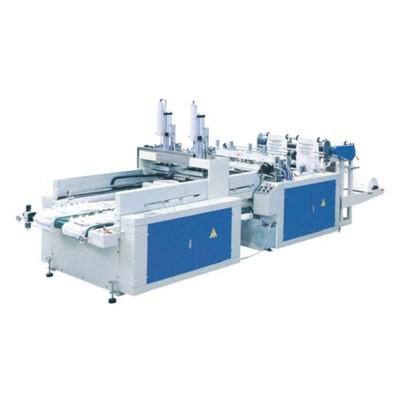
If you’re a food manufacturer tired of bad packaging waste, or you’re looking to launch a new line and need a packaging solution that’s compliant and scalable, I’d love to chat. No sales pitches, no jargon, just real talk about what your line needs to make food-grade bags that work for your product and your bottom line. Just reach out to our team, and we’ll schedule a call to walk through your specific needs.
Film Blowing Machine References:
U.S. Food and Drug Administration. (2023). Food Contact Substances: Guidance for Industry.
European Food Safety Authority. (2022). Scientific Opinion on Plastic Food Contact Materials and Articles.
Packaging Association. (2021). Food-Grade Packaging Machinery Best Practices for Small to Mid-Sized Manufacturers.
International Organization for Standardization. (2020). ISO 15378: Primary Packaging Materials for Medicinal Products—Basic Requirements for Maternal Quality Management Systems.
Ruian Huawei Machinery Co., Ltd.
As one of the most professional bag making machine suppliers in China, we’re featured by quality products and low price. Please rest assured to buy discount bag making machine made in China here from our factory. Also, quotation is available.
Address: No. 1, Building 2, Jingye Road, Dongshan Street, Rui’an City, Zhejiang Province
E-mail: 13695753569@163.com
WebSite: https://www.hw-machines.com/
