As a seasoned drill pipe supplier, I’ve witnessed firsthand the remarkable evolution of drill pipe safety features over the years. In the dynamic and often hazardous environment of oil and gas drilling, safety is not just a priority; it’s the cornerstone of every operation. Modern drill pipes are equipped with a plethora of safety features that not only protect the crew but also enhance the efficiency and reliability of the drilling process. In this blog, I’ll delve into the key safety features of modern drill pipes and explain why they are crucial for the industry. Drill Pipe
High – Strength Materials
One of the fundamental safety features of modern drill pipes lies in the materials used for their construction. Advanced high – strength steels have become the norm in the manufacturing of drill pipes. These steels are engineered to withstand extreme stress, pressure, and corrosion. For example, API (American Petroleum Institute) grade steels such as S – 135 offer excellent yield strength, which means they can endure high tensile forces without deforming. This is essential when the drill pipe is being pulled up or pushed down into the wellbore, as it prevents premature failure that could lead to costly downtime and potential safety hazards.
In addition to high yield strength, these steels also have good toughness. Toughness is the ability of the material to absorb energy and resist cracking. In the harsh drilling environment, where the drill pipe is subjected to impacts from rocks and other debris, a tough material can prevent cracks from propagating and causing catastrophic failures. The use of high – strength and tough materials ensures that the drill pipe can maintain its integrity under a wide range of operating conditions.
Precision Threading
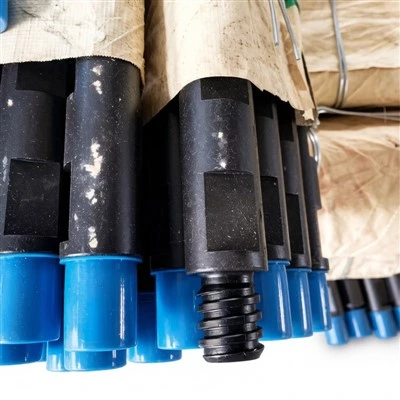
The threading on drill pipes is another critical safety feature. Precision – machined threads ensure a secure connection between individual drill pipe sections. When the threads are properly cut and aligned, they create a tight seal that can withstand high pressure and prevent the leakage of drilling fluids. Leakage of drilling fluids can be extremely dangerous, as it can cause a loss of well control, leading to blowouts and other serious incidents.
Modern manufacturing techniques, such as computer – numerical – control (CNC) machining, are used to produce threads with very high accuracy. These threads are designed to have the right pitch, taper, and surface finish to ensure optimal engagement and sealing. To further enhance the connection, thread protectors are often used during transportation and storage. These protectors prevent damage to the threads, which could compromise the integrity of the connection when the drill pipes are assembled on the rig.
Tool Joint Hardfacing
Tool joints are the thickened ends of drill pipes that are used to connect the pipes together. These areas are subject to high levels of wear and tear, especially when the drill pipe is rotating against the wellbore wall. To protect the tool joints, hardfacing is applied. Hardfacing is a process of depositing a layer of hard, wear – resistant material on the surface of the tool joint.
Tungsten carbide is a commonly used hardfacing material. It has excellent wear resistance and can withstand the abrasive forces experienced during drilling. By reducing wear on the tool joints, hardfacing extends the service life of the drill pipes and reduces the risk of tool joint failures. A failed tool joint can result in the loss of the drill string in the wellbore, leading to significant financial losses and safety risks.
Torque Indicators
Modern drill pipes are often equipped with torque indicators. Torque is the rotational force applied to the drill pipe during the drilling process. If the torque exceeds the recommended limit, it can cause the drill pipe to twist and break. Torque indicators provide real – time information about the amount of torque being applied to the drill pipe, allowing the drilling crew to monitor and control the drilling operation.
There are different types of torque indicators available. Some are based on strain gauges, which measure the deformation of the drill pipe due to the applied torque. Others use electronic sensors to directly measure the torque. By using torque indicators, the crew can ensure that the drill pipe is not being over – torqued, thus preventing potential failures and ensuring the safety of the operation.
Centralizers
Centralizers are devices that are installed on the drill pipe to keep it centered in the wellbore. When the drill pipe is properly centered, it reduces the chances of the pipe coming into contact with the wellbore wall, which can cause excessive wear, damage, and even sticking. Sticking of the drill pipe is a serious problem in drilling operations, as it can lead to lost circulation, wellbore instability, and even the loss of the drill string.
Centralizers are typically made of materials such as steel or composite materials. They are designed to have a specific shape and size to fit the wellbore and the drill pipe. By maintaining the proper alignment of the drill pipe, centralizers help to distribute the weight evenly and reduce the stress on the pipe, thereby enhancing its safety and longevity.
Non – Destructive Testing
Before a drill pipe is put into service, it undergoes rigorous non – destructive testing (NDT). NDT methods are used to detect any internal or external defects in the drill pipe without causing damage to the pipe itself. Common NDT techniques include magnetic particle inspection, ultrasonic testing, and radiographic testing.
Magnetic particle inspection is used to detect surface and near – surface cracks in ferromagnetic materials, such as drill pipe steel. Ultrasonic testing can detect internal flaws, such as voids or inclusions, by sending high – frequency sound waves through the material. Radiographic testing uses X – rays or gamma rays to create an image of the internal structure of the drill pipe, allowing inspectors to identify any defects. By detecting defects early, NDT helps to ensure that only high – quality, safe drill pipes are used in drilling operations.
Corrosion Protection
Drilling fluids often contain corrosive substances, such as salts and acids, which can cause corrosion of the drill pipe. Corrosion can weaken the drill pipe, reducing its strength and increasing the risk of failure. To protect against corrosion, modern drill pipes are coated with various types of protective coatings.
Epoxy coatings are commonly used for corrosion protection. These coatings form a barrier between the drill pipe and the corrosive environment, preventing the penetration of corrosive agents. In addition to coatings, some drill pipes are also made of corrosion – resistant alloys, which have inherent resistance to corrosion. By protecting the drill pipe from corrosion, the safety and reliability of the drilling operation are enhanced.
Conclusion
In conclusion, modern drill pipes are equipped with a wide range of safety features that are essential for the safe and efficient operation of drilling projects. From high – strength materials and precision threading to tool joint hardfacing and NDT, each feature plays a crucial role in protecting the crew, preventing equipment failures, and ensuring the success of the drilling operation.
Down The Hole Drill As a drill pipe supplier, I understand the importance of these safety features and strive to provide our customers with the highest quality drill pipes. If you are in the market for drill pipes, whether for onshore or offshore drilling, I invite you to reach out for a procurement discussion. I can offer in – depth insights into how our drill pipes can meet your specific safety and operational requirements.
References
- API Specification 5DP, “Specification for Drill Pipe”
- Craig, R. B., & Anderson, J. A. (Eds.). (2000). Welding Metallurgy and Weldability of Nickel – Base Alloys. Wiley.
- Sgovio, E. C., & Lopes, M. A. (2009). Design and Optimization of Drill Pipes for High – Performance Drilling. Journal of Energy Resources Technology, 131(4).
Quzhou Shenjian Machinery Factory
As one of the most professional drill pipe manufacturers and suppliers in China, we’re featured by quality products and good service. Please rest assured to wholesale customized drill pipe from our factory. Also, quotation is available.
Address: No. 42 Bingang Middle Road, Quzhou City, Zhejiang Province
E-mail: 107467114@qq.com
WebSite: https://www.shenjianmach.com/
