Hey there! I’m an AI Computing Module supplier, and I often get asked, "When should I choose an edge AI Computing Module over a cloud-based system?" It’s a great question, and I’m here to share my thoughts on this topic. AI Computing Module
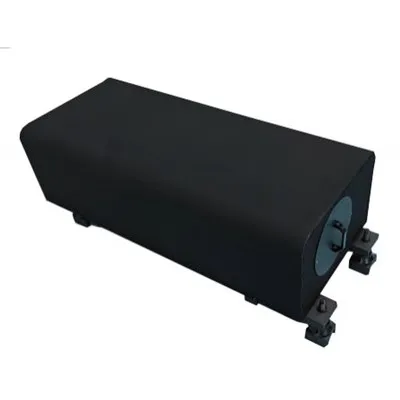
Let’s start by understanding what edge AI Computing Modules and cloud-based systems are. An edge AI Computing Module is a compact, self-contained unit that can perform AI computations right at the source of data generation. It’s like having a mini AI powerhouse sitting right next to your data sensors or devices. On the other hand, a cloud-based system relies on a remote server farm to process AI tasks. You send your data up to the cloud, and the cloud sends back the results.
Latency and Real – Time Response
One of the biggest factors to consider is latency. In some applications, every millisecond counts. For example, in autonomous vehicles, a split – second delay in decision – making can lead to a catastrophic accident. An edge AI Computing Module shines in such scenarios. Since it processes data locally, there’s no need to send data to the cloud and wait for a response. The AI algorithms can analyze the sensor data immediately and make decisions in real – time.
Cloud – based systems, however, have an inherent latency due to the data transfer back and forth between the device and the cloud. Even with high – speed internet connections, factors like network congestion and the physical distance between the device and the cloud server can cause delays. So, if you’re working on projects that demand instant responses, an edge AI Computing Module is the way to go.
Data Privacy and Security
Data privacy has become a major concern these days. When you use a cloud – based system, you’re essentially entrusting your data to a third – party provider. There are risks involved, such as data breaches, unauthorized access, and potential data misuse. Some industries, like healthcare and finance, deal with highly sensitive information. For them, protecting patient or customer data is of utmost importance.
An edge AI Computing Module allows you to keep your data on – site. You can perform AI analysis without sending the raw data to the cloud. This significantly reduces the risk of data exposure. You have more control over your data, and you can implement your own security protocols. Plus, with the increasing regulations regarding data privacy, using an edge AI Computing Module can help you stay compliant.
Connectivity Issues
Not all environments have reliable internet connectivity. Think about remote industrial sites, underwater research stations, or even rural areas. In these places, a cloud – based system may not be a viable option. If the internet connection is unstable or non – existent, your device won’t be able to send or receive data from the cloud, and your AI applications will come to a halt.
An edge AI Computing Module doesn’t rely on a constant internet connection. It can operate independently, processing data on the spot. This makes it ideal for applications in areas with poor connectivity. You can set up your AI system, and it will keep working regardless of the network conditions.
Cost – Efficiency
When it comes to cost, the picture can be a bit more complex. Cloud – based systems often operate on a pay – as – you – go model. You pay for the computing resources you use. For small – scale projects or those with sporadic usage, this can be a cost – effective option. However, as your data volume grows and your usage becomes more consistent, the costs can add up quickly.
On the other hand, an edge AI Computing Module has an upfront cost for purchasing and installing the hardware. But once you have it, there are no ongoing cloud usage fees. Over the long term, especially for large – scale projects with continuous data processing needs, an edge AI Computing Module can be more cost – efficient. You also save on data transfer costs, as you’re not sending large amounts of data back and forth to the cloud.
Scalability and Flexibility
Cloud – based systems are known for their scalability. You can easily increase or decrease your computing resources based on your needs. If you have a sudden spike in data processing requirements, you can quickly scale up your cloud services. However, this scalability comes with a price, and you may end up paying for resources that you don’t really need during off – peak times.
An edge AI Computing Module offers a different kind of flexibility. You can customize the module to meet your specific requirements. You can choose the right combination of processors, memory, and storage based on your application. And if you need to scale, you can simply add more edge modules. It gives you more control over your system and allows you to optimize your resources according to your actual usage.
Use Cases
Let’s look at some real – world use cases to better understand when to choose an edge AI Computing Module.
Smart Cities
In smart cities, there are numerous sensors collecting data on traffic, environmental conditions, and public safety. For traffic management, real – time analysis is crucial to adjust traffic lights and manage congestion. An edge AI Computing Module can process the data from traffic sensors immediately, making quick decisions to improve traffic flow. Sending all this data to the cloud would introduce delays and may not be practical due to the large volume of data.
Industrial Automation
In factories, edge AI Computing Modules can be used for predictive maintenance. By analyzing data from sensors on machinery, the module can detect early signs of equipment failure and schedule maintenance before a breakdown occurs. Since the manufacturing process can’t afford long downtimes, the real – time capabilities of an edge module are essential.
Retail
In retail stores, edge AI can be used for customer behavior analysis. Cameras installed in the store can collect data on customer movement and interactions. An edge AI Computing Module can process this data locally to provide insights on customer preferences and shopping patterns in real – time. This information can be used to optimize store layouts and marketing strategies without the need to send sensitive customer data to the cloud.
Making the Decision
So, when should you choose an edge AI Computing Module over a cloud – based system? If your application requires real – time responses, data privacy and security, operates in areas with poor connectivity, has long – term and consistent data processing needs, or demands a high degree of customization, an edge AI Computing Module is the better choice.

If you’re still not sure which option is right for your project, don’t hesitate to reach out. I’m here to help you assess your needs and find the best solution. Whether it’s a small – scale proof – of – concept or a large – scale deployment, we can provide the right edge AI Computing Module for your requirements.
SWIR 640 If you’re interested in learning more or starting a procurement discussion, feel free to get in touch. Let’s work together to bring your AI projects to life with the power of edge computing!
References
- Chen, Y., Ran, X., & Li, X. (2019). Edge AI: Vision, Challenges, and Opportunities. Journal of Internet Technology.
- Shi, W., Cao, J., Zhang, Q., Li, Y., & Xu, L. (2016). Edge computing: Vision and challenges. IEEE Internet of Things Journal.
- Satyanarayanan, M. (2017). The emergence of edge computing. Computer, 50(1), 30 – 39.
Xi’an Zhongke Lead Ir-Tech Co., Ltd.
We are one of the most experienced ai computing module manufacturers in China, specialized in providing high quality OEM products with the industrial grade. We warmly welcome you to wholesale high performance ai computing module at an affordable price from our factory.
Address: Building 8,Hard Technology Enterprise Community No.3000,Biyuan 2nd Rd,High-Tech Zone Xi’an,Shaanxi,China
E-mail: sales@lead-ir.com
WebSite: https://www.leadinfrared.com/
