If you’ve ever watched a steel mill’s blast furnace roar to life, breathed in hospital oxygen, or seen a semiconductor fab’s clean room flicker to life, you’ve interacted with products of air separation units (ASUs). For over 12 years, my team and I have built, maintained, and optimized ASUs for industrial clients across North America, and one question we get more than any other is: “Which type of ASU will actually cut our energy bills long-term?” The answer hinges entirely on how each unit consumes energy—something that varies wildly based on its design, the gases it produces, and the scale of its operation. Let’s break down the most common ASU types, their energy habits, and what that means for your bottom line. Type Of Air Separation Unit
First, let’s start with the basics: air separation is the process of taking atmospheric air (which is 78% nitrogen, 21% oxygen, and trace amounts of argon, carbon dioxide, and other gases) and separating it into its pure components. This almost always relies on cryogenic distillation for large-scale operations, but there are also non-cryogenic options that work better for smaller or more flexible needs. Energy is the single biggest operational cost for any ASU—accounting for 60 to 80% of total lifecycle expenses, per industry data—so understanding consumption patterns is non-negotiable.
Large-Scale Cryogenic ASUs: The Energy Heavyweights
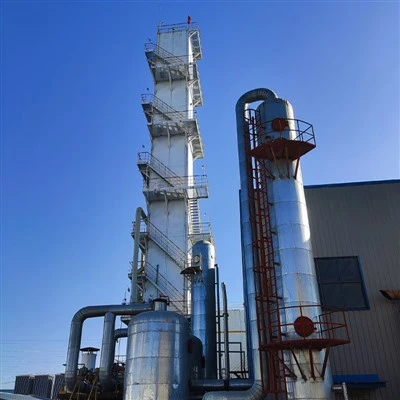
When we talk about ASUs producing 100 tons of oxygen per day or more, we’re dealing with cryogenic units, the workhorses of industries like steel, chemicals, and large-scale food processing. These units cool air to -196°C, turning it into liquid, then use distillation columns to separate components by their boiling points. How do they use energy? Roughly 70% goes to compressing and pre-cooling the incoming air, 20% to the distillation process, and 10% to pumping and refrigeration systems.
Here’s the thing about large cryogenic ASUs: their energy consumption is highly dependent on capacity. A 500-ton-per-day cryogenic ASU uses roughly 0.20 to 0.25 kilowatt-hours (kWh) per standard cubic meter (scm) of oxygen produced. Scale it up to 1,000 tons per day, and that number drops to 0.18 to 0.22 kWh per scm. That’s because larger units benefit from economies of scale in compression and heat integration—wasted heat from compressors is often reused to pre-warm separated gases, cutting down on the energy needed for refrigeration.
But wait, energy consumption isn’t static. Ambient temperature plays a huge role. On a 35°C summer day, the air entering the ASU is warmer, so the unit has to work harder to cool it down to cryogenic temperatures. We’ve seen large cryogenic ASUs use 5 to 10% more energy on hot days than they do on cool winter mornings. That’s why we always advise clients with large ASUs to install adiabatic coolers or evaporative cooling systems to bring incoming air temperature down—something that’s saved our steel mill clients an average of $120,000 a year in energy costs.
Medium-Scale Cryogenic ASUs: The Flexible Middle Ground
Not every business needs 500 tons of oxygen a day. For small chemical plants, regional hospitals, or food freezing operations, medium-scale cryogenic ASUs (10 to 100 tons per day) are a go-to. Their energy profile is different from their large cousins. A medium ASU uses about 0.25 to 0.30 kWh per scm of oxygen—15 to 25% more than a large unit—because they can’t integrate heat recovery as efficiently. Their distillation columns are smaller, so there’s more heat loss through the walls, and compression systems are less optimized for steady-state operation.
Another quirk of medium-scale cryogenic ASUs: their energy consumption spikes when output changes. If a client ramps production up or down 20% to match fluctuating demand, the unit’s energy use can jump 30% temporarily. That’s why many medium ASU clients end up running them at a constant 80% capacity instead of adjusting—even if that means producing a small excess of gas they can store in tanks to avoid energy waste. For a long time, we struggled with this until we started adding variable frequency drives (VFDs) to our medium ASUs. VFDs let the unit adjust compression speed to match actual demand, cutting energy waste by up to 22% for clients with variable production schedules.
Non-Cryogenic ASUs: The Small-Scale, Low-Cost Workhorses
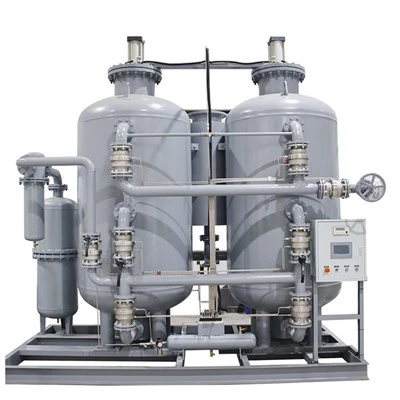
If you’re producing less than 10 tons of oxygen a day, or need the ability to quickly switch between nitrogen, oxygen, and argon, non-cryogenic ASUs are the way to go. The two most common types are pressure swing adsorption (PSA) and membrane ASUs. Their energy consumption is nothing like cryogenic units—they run on electricity to power compressors, not cryogenic refrigeration, so their energy use is far lower, at least at small scales.
PSA ASUs, which work by pushing air through absorbent materials that trap nitrogen (for oxygen production) or vice versa, use between 0.40 to 0.60 kWh per scm of oxygen. That’s higher than medium-scale cryogenic units, but wait—PSA units don’t require the same upfront infrastructure, and they’re way more flexible. They can start producing pure oxygen in 10 minutes, compared to 12 hours for a cryogenic ASU. So for a hospital that only needs oxygen during the day, a PSA unit makes sense: you don’t waste energy running it 24/7. The same goes for small food processing plants that use nitrogen to package snacks—PSA lets them adjust nitrogen output in hours, not days.
Membrane ASUs, another non-cryogenic option, use semi-permeable membranes to separate gases based on molecular size. They’re even simpler than PSA units, with no moving parts besides a small compressor. Their energy use is even lower than PSA: roughly 0.25 to 0.35 kWh per scm of oxygen. But they have a big limitation: they only produce gas at 95 to 99% purity, compared to 99.5%+ for PSA and 99.99%+ for cryogenic units. That makes membranes perfect for uses that don’t need ultra-pure gas—like inerting fuel tanks, pumping nitrogen into food packaging, or providing oxygen for aquaculture.
What About Argon? The Hidden Energy Cost Many Clients Miss
A lot of ASU operators only focus on oxygen and nitrogen, but if you’re using argon (a common byproduct of air separation), it changes the energy equation. Cryogenic ASUs are the only type that can economically separate argon, which has a boiling point between oxygen and nitrogen. Extracting argon adds about 0.03 kWh per scm of total gas produced, so a large cryogenic ASU producing argon will use roughly 0.21 to 0.26 kWh per scm total, compared to 0.18 to 0.22 kWh for just oxygen and nitrogen. For glass manufacturing plants, which use argon to float molten glass, that extra energy is worth it—switching from a standalone argon supplier to an ASU with argon extraction cuts their gas costs by 40%. But for smaller clients, the added complexity of argon extraction might not be worth the energy penalty.
Real-World Example: What This Means for Your Business
Last year, we worked with a small semiconductor fab that was using a cryogenic ASU they’d bought 10 years prior. Their production was 25 tons of oxygen a day, so they thought a medium cryogenic ASU was the only option. But after an energy audit, we realized their energy bills were $180,000 a year—almost 70% of their total operational cost. We swapped it for a medium PSA ASU with VFDs, and their energy use dropped by 38%, cutting their annual bills by $68,000. They also gained the flexibility to adjust nitrogen and oxygen output as their clean room schedules changed, which meant they no longer paid to store excess gas in tanks.
On the flip side, a steel mill client we’ve worked with for 8 years has a 1,200-ton-per-day large cryogenic ASU. Last summer, their energy use spiked 11% during a heatwave. We worked with them to install adiabatic coolers, and now their ASU’s energy use is consistent year-round, no matter the outside temperature. That small upgrade has saved them over $150,000 a year in energy costs.
Don’t Make These Common Energy Mistakes
After 12 years in this business, I’ve seen clients make three big mistakes when it comes to ASU energy consumption. First, buying the cheapest unit upfront and ignoring long-term energy costs. A $50,000 savings on a small PSA unit might sound great, but if it uses 20% more energy than a slightly more expensive model, you’ll pay that difference back in 3 years. Second, not maintaining their ASU regularly. Clogged filters, worn compressors, or leaky distillation columns can increase energy use by 15 to 25% without anyone noticing. We offer annual energy audits for all our clients that catch these issues before they add up. Third, running the ASU at full capacity 24/7 even when demand is low. For small to medium units, idling wastes more energy than adjusting output to match actual needs.
Time to Find the Right ASU for Your Needs
At the end of the day, there’s no one-size-fits-all when it comes to ASU energy consumption. Large industrial operations with steady, high demand benefit most from cryogenic units, where economies of scale drive down per-gas energy use. Smaller operations, or those needing flexible, on-demand gas production, are better off with PSA or membrane ASUs, even if their per-gas energy use is slightly higher.
Air Separation Unit If you’re looking to cut your ASU’s energy costs, or just want to make sure you’re using the right type for your operation, reach out to us for a consultation. We’ll walk through your production needs, current energy bills, and long-term goals, and help you pick an ASU that’s both cost-effective and energy-efficient. Don’t let unnecessary energy costs eat into your profits—let’s work together to optimize your air separation setup.
References
- Air & Waste Management Association. (2021). Energy Efficiency in Industrial Gas Separation Processes. Journal of the Air & Waste Management Association, 71(6), 689-702.
- Cryogenic Society of America. (2020). Modern Cryogenic Air Separation: Energy Optimization and Design. Cryogenics, 109, 103025.
- Global Air Separation Equipment Market Report. (2022). Industry Analysis and Forecast to 2028. Grand View Research Inc.
- Pressure Swing Adsorption Technology Association. (2021). PSA ASU Energy Consumption Benchmarks for Small-Scale Industrial Users. Journal of Industrial Gas Technology, 13(2), 45-52.
Xinxiang Jiale Intelligent Equipment Co., Ltd.
As one of the most professional air separation unit manufacturers and suppliers in China, we’re featured by quality products and good service. Please rest assured to buy durable air separation unit for sale here from our factory. We also accept customized orders.
Address: No.3913, 9th Floor, Unit 3, East Commercial and Office Complex, Baolong City Plaza, Hongqi District, Xinxiang City, Henan Province, China
E-mail: cc2397410@gmail.com
WebSite: https://www.jiale-asu.com/
