Hey everyone, it’s Jake here, and welcome back to the site where we break down scaffolding stuff without all the confusing jargon. Today’s question comes up all the time from contractors and small construction guys I chat with on job sites: “What’s the real difference between all these scaffolding couplers?” Let’s be honest—walking into a supply yard and seeing 5 different types, each with a weird name, can make you want to just grab the cheapest one and run. But trust me, picking the wrong coupler isn’t just a hassle; it can be straight-up dangerous on a job. I’ve seen guys skip the right coupler to save 10 bucks and end up with a wobbly scaffold that shut down the whole site. So let’s cut through the noise and get to the actual differences between the main ones we sell here. Scaffolding Couplers

First off, let’s nail down what a scaffolding coupler even is, quick—no fancy textbook stuff. It’s that little metal (or sometimes plastic, but mostly metal) clamp that connects two pipes, right? When you’re building a scaffold, you’ve got vertical poles, horizontal ledgers, and diagonal braces. Each joint needs a specific coupler, and mixing them up is a recipe for disaster. I once had a new apprentice on a site use a right-angle coupler for a diagonal brace instead of a swivel one, and we spent an hour undoing it because the brace wouldn’t align right. Dude, that’s not the mistake you want to make when your foreman’s breathing down your neck.
Let’s start with the most common one people ask about: the right-angle coupler, sometimes called a fixed coupler. This is the workhorse, no question. It’s made to connect two pipes at a perfect 90-degree angle, right? Like when you hook a horizontal ledger to a vertical pole—they have to be dead straight, no wiggling, so the scaffold doesn’t lean. What’s cool about these is they come in two main finishes: galvanized and powder-coated. Galvanized is the heavy-duty one, dipped in zinc to resist rust, which is perfect for outdoor jobs in rain or snow. Powder-coated is a little cheaper, comes in different colors (though we mostly use black for consistency), and works great for indoor projects or short-term outdoor gigs where you’re not leaving them exposed to the elements for months. The key thing here is fixed = rigid. If you need that joint to not move, this is your guy. We always have these in stock in sizes for standard 48.3mm scaffold pipes—most common in North America and Europe—so you don’t have to wait around for special orders.
Next up is the swivel coupler, or sometimes called a rotating coupler. This is the one I reference that apprentice with, because it does the exact opposite of the fixed one. It lets two pipes connect at any angle, not just 90 degrees. That’s why you use it for diagonal braces—when you’re running a brace from a vertical pole to a horizontal ledger, you might need it at 45 degrees, or even a weird angle if the site’s lumpy. I’ve also seen them used for connecting pipes around a corner if you’re building a scaffold that wraps around a tree or an existing structure. The catch here is: don’t use a swivel coupler for load-bearing right-angle joints. Yeah, it can do 90 degrees, but it’s not as strong as a fixed one because of the rotating mechanism. We had a customer test that once—used a swivel for a ledger joint, and when they stacked materials on it, the joint shifted a little. It wasn’t a collapse, but it made them redo the whole section. Lesson learned: swivel is for angles that aren’t 90, fixed is for 90s.
Then there’s the sleeve coupler, also called a joint coupler or butt coupler. This one’s super simple—it’s a short metal tube that slides over two ends of scaffold pipe to join them end-to-end. So if you need a longer vertical pole than what you have, you slide two pipes into the sleeve, tighten the bolts, and boom, you’ve got a longer pole. That’s way better than using two separate clamps and hoping they line up. The sleeve coupler’s design is all about alignment—if the two pipes aren’t perfectly centered in the sleeve, it creates a weak spot. We make sure our sleeves have inner grooves or a small stop to keep pipes aligned, so you don’t have to worry about that. These are often overlooked, but they’re essential for tall scaffolds where a single pipe isn’t long enough. I always tell contractors to keep a box of these on the truck—you never know when you’ll need to extend a pole last minute.
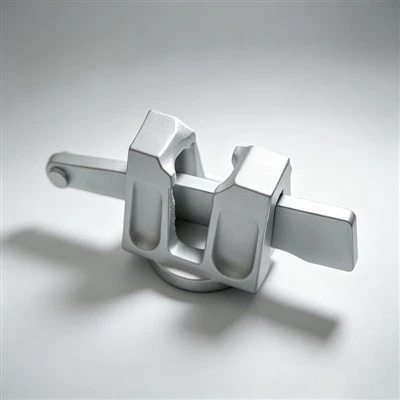
Wait, there’s also the putlog coupler—this is the one that confuses a lot of new guys. Putlog is that horizontal pipe that sticks out from the scaffold to hold planks, right? So a putlog coupler is specifically made to connect a horizontal putlog (the pipe holding the plank) to the main vertical pole. The big difference here is the shape—one side is a half-clamp (or a “fork”) that fits around the putlog, so you can slide the plank into it without having to thread the whole pipe through a clamp. That saves so much time when you’re setting up planks. I’ve seen people try to use a right-angle coupler for a putlog, but they end up having to drill holes in the planks or bend the pipe to fit, which is just messy. Putlog couplers are made for that exact job, so don’t skip them. They come in single and double versions too—double if you need to connect two putlogs to one vertical pole, like for a wider scaffold bay.
Now, let’s talk about the stuff that actually matters when choosing, not just the name. First, load capacity. Every coupler has a rated load, meaning how much weight it can hold without failing. Fixed couplers have a higher rated load than swivel ones, because they’re rigid. Sleeve couplers depend on how well they grip the pipe—if you tighten the bolts too loose, they slip. We always print the load rating on our couplers, by the way, so you don’t have to guess. Second, material. Most are ductile cast iron, which is tough and can take a beating on job sites, but we also have forged steel for super heavy-duty jobs—like for scaffolds supporting heavy machinery or hundreds of concrete blocks. Forged ones are pricier, but they last forever and don’t crack if you drop them. Third, corrosion resistance. If you’re working in coastal areas, where salt air eats metal, get galvanized couplers. Powder-coated might peel in salt air, leading to rust inside the clamp that can make the bolts seize up. I had a customer in Miami learn that the hard way—last year, they used powder-coated in a marina, and by the end of the project, half the couplers had rusted bolts they couldn’t loosen. Don’t do that.
Another thing I get asked: can you reuse couplers? Short answer: yes, but only if you check them. Before each use, look for cracks, rust, or bent bolts. If the clamp is twisted or the nut is stripped, toss it. I’ve seen guys reuse a coupler that had a tiny crack from being dropped, and when a worker stepped on the scaffold, it split. Not fun. We do offer bulk packs for contractors who reuse, since that’s more cost-effective than buying new every time. And if you’re buying used, make sure you inspect every single one—don’t just take someone else’s word for it.
Let me throw in a quick real-life story to drive this home. A few months back, I was on a residential renovation site, and the contractor was trying to build a scaffold for painting the second floor. He grabbed a box of what he thought were right-angle couplers for the diagonal braces, but they were actually swivel ones. He didn’t realize until halfway through when the braces kept shifting, and the foreman shut the whole job down. They had to run to a hardware store and pay double the price for the right couplers, and lost half a day of work. That’s 100% avoidable if you just know what each coupler does. The takeaway here is: match the coupler to the joint, not the price tag.
Now, I know this can feel like a lot, especially if you’re new to scaffolding. But here’s the deal—we don’t just sell couplers, we work with construction guys every day, so if you’re not sure which one you need, just hit us up. We can walk you through it, no salesy pressure, just actual advice from people who’ve been on job sites. Whether you’re a small contractor doing a home remodel or a big company working on a commercial build, we’ve got the couplers you need, in stock, at prices that don’t break the bank. We also offer bulk discounts for regular customers, and we ship fast so you don’t get stuck waiting.
At the end of the day, scaffolding is only as safe as its weakest joint. The couplers are those joints. So don’t cut corners here—get the right one for the job. If you have questions, or you need to place an order, just reach out. We’re here to help, not just make a sale.
Cuplock Scaffolding References
- Occupational Safety and Health Administration (OSHA). (2022). Scaffolding Coupler Safety Standards. Retrieved from OSHA.gov
- International Organization for Standardization (ISO). (2021). Specifications for Scaffolding Couplers and Clamps. ISO 1461:2021
- Scaffold Industry Association (SIA). (2023). Guide to Selecting and Using Scaffolding Couplers. SIA Technical Bulletin 07-23
Hebei Shuangtai Mold Frame Technology Co., Ltd.
Hebei Shuangtai Mold Frame Technology Co., Ltd. is one of the most professional scaffolding couplers manufacturers and suppliers in China. With abundant experience, we warmly welcome you to wholesale cheap scaffolding couplers from our factory. If you have any enquiry about customized service, please feel free to email us.
Address: Nanluzhuang Industrial Zone, Majiawu Town, Renqiu City, Cangzhou City, Hebei Province
E-mail: 1297629160@qq.com
WebSite: https://www.stscaffoldng.com/
