If you’ve ever walked through a machine shop at 7 a.m., when the air still smells like cutting fluid and the only sound is the low whir of tools shaping raw metal, you know how much the right equipment makes or breaks a day. As a metal cutting and forming supplier, I’ve spent 18 years on that shop floor—kneeling beside a lathe when a tool snaps mid-job, staying late to rework a batch of precision parts for a aerospace client, and explaining to a young machinist why a rotary tool isn’t always better than a non-rotary one. The line between rotary and non-rotary metal cutting tools isn’t just technical jargon; it’s the difference between a part that meets print specs and one that’s scrap before it leaves the fixture. Let’s break down the real, on-the-ground differences that matter, not just for engineers in offices, but for anyone cutting metal for a living. Metal Cutting and Forming
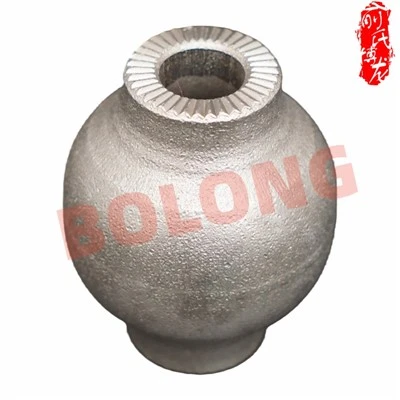
First, let’s start with the core of what makes these tools different: motion. Rotary cutting tools spin around a fixed axis, their entire body rotating as they cut. Think of a drill bit, a end mill, or a saw blade—you’ve seen these. Non-rotary tools, by contrast, stay stationary (or move only along a linear path, no spin) as they shear or shape metal. A single-point cutting tool on a lathe, a tap for threading, or a burnishing tool falls here. That motion difference ripples through every part of performance, from speed to finish to what materials you can work with.
Let’s talk about material compatibility, because that’s the first question every machinist asks when picking a tool. Rotary tools shine when you’re working with soft to medium metals that don’t generate too much heat or wear on the cutting edges. Aluminum, mild steel, brass—these are rotary tool staples. The spinning motion distributes heat across hundreds of cutting edges (think about the flutes on an end mill) so the tool doesn’t overheat as fast. I learned this early on, when a local automotive shop brought me a rush order for 500 aluminum engine brackets. They’d tried a non-rotary tool first and burned through three tools in a day, because the single cutting point couldn’t dissipate heat quickly enough. Switched to a 4-flute carbide end mill, and we cut the cycle time in half—no burnt edges, no broken tools, just consistent parts. But rotary tools have a limit here. When you get to hard metals like titanium or tool steel, the high spin speed can generate too much friction, and the tool’s edges chip or deform fast. We also see issues with very thin or flexible metals, like foils or thin-gauge stainless steel. The spin of a rotary tool can vibrate the material, causing it to warp or create chatter marks. That’s where non-rotary tools come in. Their rigid, single or small set of cutting edges handle hard, tough metals better, because the heat stays localized at the cutting point, and you can run at slower, more controlled speeds without chattering. We work with a medical device maker that uses non-rotary single-point tools to shape titanium hip implants—they need a finish so smooth it won’t irritate tissue, and the rigid, non-spinning tool avoids the vibration that rotary tools leave behind on curved implant surfaces.
Next, cutting efficiency and speed. Rotary tools win here, full stop. The ability to have multiple cutting edges means each revolution of the tool removes more material in one pass. A 10mm end mill with 4 flutes, spinning at 1,000 RPM, is removing material four times faster than a single non-rotary point moving at the same linear speed. For high-volume production runs, that’s non-negotiable. We supply rotary saw blades to a construction firm that cuts rebar for bridge projects—they run 24-hour shifts, and the rotary blades let them cut 10 times more rebar per hour than a non-rotary abrasive saw. But efficiency has a catch: accuracy. Rotary tools are prone to runout—small wobbles in their spin axis, even the best ones. Over long runs, that runout adds up, leading to parts that are slightly out of tolerance. Non-rotary tools, because they don’t spin, have almost no runout at all. That makes them the go-to for precision jobs, like threading bolts for aerospace engines or shaping small, complex parts for electronics. Last year, a client brought us a batch of tiny stainless steel connectors for a satellite component—each one had to fit within a 0.001mm tolerance. We tried a rotary threading tool first, and the runout caused 12% of the parts to fail inspection. Switched to a non-rotary single-point threading tool, and not a single part was rejected. It took twice as long per part, but when you’re building something that’s going to orbit the Earth, accuracy beats speed every time.
Finish quality is another big one, and it ties back to both motion and tool type. Rotary tools, when set up correctly, can produce extremely smooth finishes, especially with high-flute counts and proper cutting fluid. But they leave a pattern called a feed mark—tiny, repeating lines along the cut surface, left by each flute passing over the metal. For parts that will be painted or coated, those feed marks don’t matter much, but for parts that will be left bare, like turbine blades or decorative metal hardware, they can be a problem. Non-rotary tools, because they have no spinning motion, leave almost no feed marks at all. The cut surface is uniform and smooth, which saves time on finishing steps like polishing. We recently worked on a custom stainless steel sign for a downtown restaurant—their original manufacturer used a rotary laser-cut tool, which left visible feed marks along the edges. Our non-rotary deburring tools smoothed those edges to a mirror finish without adding extra steps, which made the client happy and cut their installation time by three days. That said, non-rotary tools have their own finish downside: they can leave a slight burr, or raised edge, on the cut surface, because the cutting point shears the metal rather than peeling it away like a rotary tool. You have to adjust the tool’s angle and pressure to minimize that, which is a skill that takes years to master.
Tool life and cost, the practical stuff that keeps shop managers up at night. Rotary tools, with multiple cutting edges, can have long lives if you use the right grade of carbide or high-speed steel. But when an edge breaks, you have to replace the entire tool—for end mills, for example, if one flute chips, you have to throw the whole bit away, even if the others are still good. Non-rotary tools, by contrast, have single or small sets of edges that can be re-sharpened multiple times. A single-point lathe tool, for example, can be ground down 5-10 times before it needs to be replaced, which cuts the cost per part significantly over long runs. We had a client who was using rotary turning tools for 1,000-piece runs of mild steel brackets—they were spending $0.75 per part on tool costs. Switched to non-rotary turning tools that cost $2 each but could be resharpened, and their tool cost dropped to $0.12 per part, a 84% savings. But rotary tools have a cost advantage for high-volume, fast jobs: even if they wear out faster per part, their cutting speed means you finish the run in half the time, which saves on labor costs. It’s a trade-off, not a clear win for one or the other.
Then there are the niche uses, the jobs that only one tool type can do. Rotary tools are essential for drilling holes—you can’t drill a clean, deep hole with a non-rotary tool, that’s just not how hole-making works. They’re also the backbone of milling, sawing, and grinding, where you need to remove large amounts of material quickly. Non-rotary tools, though, are used for threading, burnishing, broaching, and certain types of reaming. Broaching, for example, is how you make internal splines in a gear—you pull a long, stationary tool with multiple cutting edges through a pre-drilled hole, shaping the entire spline in one pass. A rotary tool can’t do that; the torque would twist the tool and break it before the cut was done. We supply broaching tools to a automotive transmission parts maker, and those non-rotary tools are the only way they can produce the internal splines that let gears fit together smoothly.
Over the years, I’ve learned that there’s no “best” tool—only the right tool for the job. I’ve seen new machinists jump on the latest rotary tool, thinking it’s faster and better for everything, only to end up with scrap parts because they didn’t account for material hardness or precision requirements. I’ve also seen veteran machinists stick to non-rotary tools for every job, missing out on speed and efficiency that could save their shop thousands. That’s why at our metal cutting and forming shop, we don’t just sell tools—we work with clients to match the right tool to their specific job. Whether you’re running a high-volume production line, building custom medical devices, or making a one-off custom part, the difference between rotary and non-rotary tools doesn’t have to be confusing. It’s about knowing when spin helps and when it hurts, when speed matters more than accuracy, and when a smooth finish will make or break your part.
If you’re unsure which tool is right for your next project, or you need help finding the right cutting tools to keep your parts on spec and your shop running smoothly, reach out to our team. We’ve spent decades on the shop floor, so we don’t just talk about technical differences—we understand what works when the machine is whirring and the clock is ticking. We can walk through your design, your material, your volume needs, and help you pick the tools that will save you time, money, and hassle. Don’t let tool choice hold your project back—let’s work together to make sure your parts are perfect, every time.
Automotive Brackets and Mounts References
ASM International. (2006). Metal Cutting: Theory and Practice. ASM Handbook Volume 16.
Klocke, F. (2011). Manufacturing Processes 1: Cutting. Springer.
Machinery’s Handbook. (2020). Rotary and Non-Rotary Cutting Tools. Industrial Press.
Ningbo Fenghua Bolong Machinery Manufacturing Co., Ltd.
Ningbo Fenghua Bolong Machinery Manufacturing Co., Ltd. is one of the most professional metal cutting and forming manufacturers and suppliers in China, also supports high quality customized service. With abundant experience, we warmly welcome you to buy durable metal cutting and forming made in China here from our factory.
Address: No. 27 Hehai Road, Binhai New Area, Fenghua Economic Development Zone, Ningbo City, Zhejiang Province
E-mail: seven@nbbolongmachinery.com
WebSite: https://www.nbbolongmachinery.com/
