Hey everyone, it’s Jake here from your go-to pneumatic valve actuator supplier—you know, the guy who’s spent the last 7 years troubleshooting these bad boys in plants all over the Southeast. Today I wanna talk about something that comes up in literally every single consult I do: how to keep your pneumatic valve actuators safe while they’re running. I’ve seen way too many ops teams brush this off like it’s boring stuff, then end up with a stuck valve, a blown seal, or even a minor injury that coulda been 100% avoided. Let’s dive in, no fancy jargon, just real stuff I’ve learned on the job. Pneumatic Valve Actuator

First off, let’s get one thing straight: safety here isn’t a one-and-done check on installation day. It’s a continuous loop that starts before you even fire the actuator up, keeps going during operation, and wraps up with regular maintenance. I see a lot of folks skip the pre-start checks because they’re crunched for time, but that’s where most of the sneaky problems hide. Let’s start with the basics of pre-operation—this is non-negotiable, no exceptions.
First thing I always tell customers to check is your air supply. Most actuators run on compressed air, right? If that air’s got gunk in it, or the wrong pressure, you’re asking for trouble. I had a client last year who kept having actuators slamming shut randomly—turns out their air line was full of water condensation because they never drained their air filter. Water in the actuator will rust the piston, warp the seals, and even mess with the valve’s control signals. And pressure? Don’t just go by the gauge on the compressor. Check the actuator’s spec sheet (I keep these on file for every customer, no matter how small their order is) to make sure you’re not pumping more air than it’s rated for. Overpressurizing blows seals, cracks the actuator body, and can even make the whole thing lurch when it cycles. If you’re running at 10 PSI over the max, that’s a disaster waiting to happen. Also, check for leaks in the air lines and fittings before you start. A tiny leak might not seem like a big deal, but over months it can lead to inconsistent actuation, and worse—uncontrolled movement that can damage the valve or hurt someone. I use soapy water in a spray bottle for this; just spritz it on fittings, and if you see bubbles, tighten it or replace the part. Way cheaper than a shutdown.
Next up, during operation, you can’t just set it and forget it. I get it, ops guys are busy monitoring 10 other things on the plant floor, but a quick visual check once a shift saves so much headache. What should you look for? First, listen. A healthy pneumatic actuator runs quiet—no hissing, no clunking when it cycles. If you hear constant hissing after it’s reached its open/closed position, that’s a seal leak. If it clunks hard when it hits the end of its stroke, you might have misalignment, or the end-of-stroke bumpers are worn out. Those bumpers are there to absorb the impact, and if they’re gone, the actuator and valve will take a beating every time it moves, leading to cracks and failure way faster. Also, check for unusual heat. If the actuator body is way hotter than the air around it, that could be from excessive friction in the piston or moving parts, which will wear stuff out prematurely. Don’t ignore that—pop off the cover and grease (using the right grease, not whatever’s in the shop bucket) if it’s dry. Oh, and for actuators that do frequent cycling—like in packaging or food processing lines that run nonstop—set a timer for quick mid-shift checks. 5 minutes every 2 hours is nothing compared to a 8-hour shutdown.
Now, alignment is something that’s super often overlooked, and it’s a huge safety issue. If the actuator isn’t perfectly aligned with the valve stem, every time it turns on or off, it’s putting side pressure on the stem, the seals, and the actuator’s output shaft. That leads to worn seals, bent stems, and even the actuator shifting on its mount. I had a water treatment plant client a while back that had an actuator fall off the valve mid-operation because they didn’t align it right during install—luckily no one got hurt, but the valve closed wrong, leading to a whole system backup. How do you check alignment? Most modern actuators come with a simple alignment kit, but even if you don’t have that, use a straightedge to line up the actuator’s output shaft with the valve stem. Tighten the mounting bolts in a crisscross pattern too—don’t just crank one bolt all the way down first, that’ll throw alignment off. If you’re not sure, call me— I offer free on-site alignment checks for any customer, no matter if you bought the actuator from me or not. That’s just how I roll.
Then there’s the matter of pressure relief. Wait, your actuator has a pressure relief port, right? Most folks don’t even know that’s there. That port is designed to release excess air pressure if something malfunctions—like if the control signal doesn’t cut off, or the line clogs, and pressure builds up too much. If you plug that port, you’re creating a pressure bomb. I’ve seen actuators crack wide open because someone accidentally covered that port when they were running a new line. So never, ever block that pressure relief port. If it’s spraying air (which it’s supposed to do in case of overpressure), that’s normal. Just make sure it’s not pointing toward anyone or any sensitive equipment. We can also supply custom covers for that port if you’re worried about debris getting in, just let me know.
Maintenance is another big one—this isn’t something you do once a year and call it good. Let’s break it down into small, manageable steps. First, lubrication. Pneumatic actuators need lubrication for the moving parts: piston seals, O-rings, output shaft, bushings. Again, use the right lubricant—most actuators use silicone-based or petroleum-based grease specifically rated for pneumatic systems, not regular motor oil. If you use the wrong stuff, it will eat through the seals. How often? For actuators that run every hour or less, lube them every 3 months. For ones that run nonstop, lube them every 1-2 months. And if you’re in a dirty environment—like a mining plant, or a wood mill—you’ll need to check seals more often, because dust and debris will wear them down faster. We sell maintenance kits specifically matched to each actuator model we supply, so you can order the right grease and parts without guessing.
Seal replacement is non-negotiable on a schedule. Most rubber seals have a lifespan of 2-5 years, depending on use. Even if they don’t look worn, they dry out, crack, and get brittle over time. If you wait until a seal leaks during operation, you could have the actuator fail mid-cycle. I tell all my customers to mark their calendars for seal replacement every 2 years, no exceptions. It’s a 30-minute job that prevents thousands in downtime. Also, when you replace seals, always use genuine OEM seals—cheap knockoff seals might save you a few bucks, but they’ll wear out in half the time, and could cause your actuator to fail. I only sell genuine parts, no junk, so you know you’re getting quality.
Then there’s safety accessories. Don’t skip adding basic safety add-ons to your actuators. First, limit switches. These let you know exactly when the actuator is fully open or closed, so you don’t have to guess. If a limit switch is out, you might think the valve is closed when it’s actually partially open, leading to process issues and safety risks. Also, position transmitters, which let you monitor the valve’s position remotely—super helpful for big plants where you can’t check every valve in person every shift. And if your process is hazardous—like handling flammable materials, or high-pressure gas—add a lockout/tagout (LOTO) device to your actuator. That way, when you’re doing maintenance, you can lock the actuator in a safe position so it doesn’t cycle accidentally. OSHA loves when you have those, and it’s just common sense.
Wait, let’s talk about common mistakes I see all the time. One big one is modifying the actuator. Like, drilling extra holes, or changing the mounting, or using it for a task it’s not rated for. For example, if you have a spring-return actuator that’s rated for 100 PSI, and you use it on a system that runs at 120 PSI, you’re asking for it to fail. Never modify an actuator without checking with the manufacturer first—that’s me, by the way. Another mistake is ignoring environmental factors. If your actuator is outside in freezing temperatures, the water in the air line can freeze, making the piston seize. For hot environments, you need heat-resistant seals. We do custom actuators for extreme temps, but most of the time, just adding a heater kit or insulation solves the problem. I had a customer in Alaska last year who was having actuators seize in winter, we added small inline heaters to their air lines, and it fixed the issue completely.
And finally, training. This is the part that’s often overlooked but is so important. Your ops and maintenance teams need to know how to operate and maintain these actuators safely. I do free training sessions for all my customers—can be on-site, over a Zoom call, whatever works for your team. I walk them through the pre-start checks, how to read the pressure gauge, how to spot a bad seal, and how to use safety accessories. Most of the time, people get in trouble because they just don’t know what to look for, not because they’re careless.
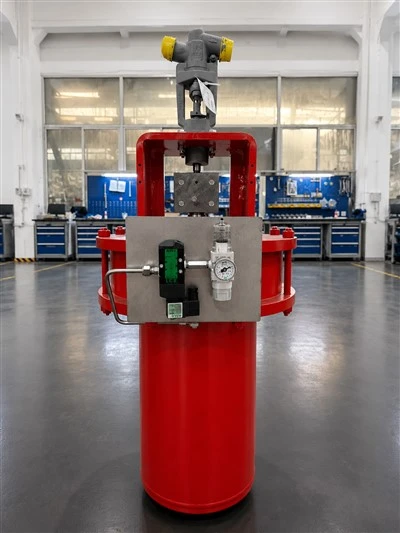
At the end of the day, keeping your pneumatic valve actuators safe isn’t rocket science—it’s about small, consistent checks, using the right parts, and not cutting corners. I’ve been doing this long enough to know that every problem has a simple fix, but only if you catch it early. If you’re having issues with your current actuators, or you need new ones, or you just have questions about maintenance, hit me up. I’m here to help you keep your plant running smoothly and safely. No sales pitch, just real advice from someone who’s seen it all.
Pneumatic Valve Actuator References:
- “Pneumatic Valve Actuator Safety and Maintenance Best Practices,” Industrial Valves & Actuators Association, 2022.
- OSHA General Industry Guidelines for Process Equipment Safety, U.S. Department of Labor, 2021.
- “Pre-Operation Safety Checks for Compressed Air Systems,” Compressed Air and Gas Institute, 2020.
- Actuator Seal Lifespan and Replacement Standards, Motion Control Association, 2023.
Zhejiang Bigtork Valve Automation Co., Ltd.
Zhejiang Bigtork Valve Automation Co., Ltd. is one of the leading pneumatic valve actuator manufacturers and suppliers in China. We warmly welcome you to buy customized pneumatic valve actuator at competitive price from our factory. Contact us for more details.
Address: 98 Yuanqu Avenue,Anfeng Industrial Zone,Oubei,Yongjia,Zhejiang,China.
E-mail: sales@bigtork.com
WebSite: https://www.bigtork.com/
