If you’ve walked past a busy automotive assembly line on a recent shift, or popped the hood of a pickup truck or heavy-duty SUV to inspect its undercarriage, you’ve probably interacted with a hydraulic linear actuator without even realizing it. For 12 years, I’ve worked as a hydraulic linear actuator supplier, visiting plant floors, sitting through component design reviews, and troubleshooting mid-production tweaks with engineers who once wrote off hydraulics as outdated, gas-guzzling tech better left to construction cranes and farm equipment. Today, that narrative is shifting fast—and the question I get asked most often isn’t if hydraulic linear actuators belong in automotive applications, but where and how they can outperform the competition when designed and paired properly for the auto space. Hydraulic Linear Actuator

Let’s start with what makes automotive components unique. The average vehicle (whether it’s a gas-powered family sedan, an electric work truck, or a heavy-duty delivery van) operates in extreme conditions: 100+ degree summer heat on a tarmac, freezing winter cold at highway speeds, constant vibration from potholes and dirt roads, and demand for precision, durability, and efficiency that doesn’t cut into fuel economy or payload capacity. Linear actuators—devices that convert hydraulic pressure into straight-line motion—have been the go-to for linear movement in industrial settings for decades, but for a long time, automakers favored electric actuators or pneumatic systems for car interiors and light-duty underhood parts. That’s changing, and here’s why.
First, let’s break down the core strengths of hydraulic linear actuators that solve specific pain points in automotive design. Electric actuators, for example, use motors and gears, which can overheat under sustained high load, wear out after tens of thousands of cycles, and require heavier wiring to deliver enough torque for heavy lifting. Pneumatics rely on compressed air, which is prone to leakage, has low force density, and struggles to maintain consistent motion under variable loads. Hydraulics, by contrast, use pressurized fluid (usually mineral oil or, increasingly, biodegradable synthetic fluids for eco-compliant applications) that transfers force evenly across a linear cylinder, delivering unmatched force density for their size. For automotive use, that translates to being able to lift, adjust, or hold extremely heavy loads without adding bulk or weight to a vehicle—a critical win for both performance and fuel efficiency.
Take the work truck segment, for example. Last year, we worked with a leading commercial van manufacturer designing a system for automatic tailgate lift doors on their 10,000-pound payload capacity delivery vans. Their initial design used two electric actuators, but during testing at a delivery hub in Texas, the actuators failed after 8 months of repeated use—one driver might open and close the tailgate 20 times a day, 5 days a week, adding up to 8,000 cycles a month. The electric actuators’ motors burned out under the sustained load of lifting 300-pound steel tailgates, and the gears stripped when drivers caught a pallet mid-lift and tried to close the door. Our hydraulic linear actuators, designed with a sealed housing to keep dust and road grime out, a built-in pressure relief valve to prevent overloading, and synthetic fluid rated for -40 to 180 degrees Fahrenheit, didn’t have a single failure during 12 months of field testing. They also cut the actuator weight by 15 pounds per van, which improved fuel economy by 0.7% over 100,000 miles—hardly a trivial number when you have 50,000 vans in a fleet.
Another high-growth automotive area is electric vehicle (EV) performance and chassis systems. As automakers push to extend EV range by reducing vehicle weight, hydraulic linear actuators are perfect for adjustable suspension components. Traditional passive suspensions use fixed springs and shocks, but adaptive suspensions that adjust ride height or damping based on road conditions add significant weight when built with electric parts. Our hydraulic actuators, when paired with a small, on-board hydraulic pump powered by the vehicle’s 48V electrical system, can adjust ride height in less than 500 milliseconds, delivering a smoother ride at highway speeds and better ground clearance for off-road or curbside loading. A startup EV maker I consulted with last year told us that switching from electric to hydraulic actuators for their adaptive suspension cut the suspension system weight by 22 pounds, which translated to a 2.3% increase in range—enough to add 15 miles to their base model, a huge selling point for consumers.
Don’t get me wrong, hydraulic linear actuators aren’t a one-size-fits-all solution. They do have limitations that have kept them out of some automotive applications historically. For example, early hydraulic systems leaked fluid, which was bad for underhood components and potentially harmful to the environment. But modern designs have solved that: we use custom-machined piston seals made from abrasion-resistant polyurethane that have a 10x lower leak rate than 10-year-old designs, and we offer fully sealed systems that meet ISO 15001 standards for fluid retention. Another limitation is space: hydraulic systems require a small pump and reservoir, which can be a problem for compact cars with tight engine bays. But for full-size trucks, commercial vehicles, and high-performance EVs with larger engine or chassis space, that extra component is a non-issue, and the benefits far outweigh the tradeoff.
One area where hydraulic linear actuators have made unexpected inroads recently is in automotive interiors. Wait, I know—interiors? You’d think electric seat adjusters and power liftgates would be enough. But take heavy-duty pickup truck seats: drivers of work trucks often spend 10+ hours a day in their seats, so adjustability that lets them shift their weight, tilt the seat cushion, or extend the thigh support is critical for reducing fatigue and injury. Traditional electric seat adjusters use tiny motors that can’t deliver the smooth, consistent motion needed for multi-point seat adjustment, so many drivers end up with seats that are either too far forward, too high, or don’t support their legs properly. Our compact hydraulic linear actuators, mounted in the seat frame, deliver smooth, low-vibration motion at a fraction of the motor size, and can adjust up to 8 points on a seat (fore/aft, height, tilt, thigh support) with just one actuator instead of three or four electric units. A Ford fleet customer we work with reported a 18% drop in driver fatigue-related downtime after switching their work truck seats to hydraulic adjusters—something that translates directly to lower operating costs for their business.
Another underdiscussed benefit of hydraulic linear actuators in automotive applications is their durability in extreme operating conditions. I mentioned earlier the Texas delivery hubs, but let’s talk about cold weather. A few years ago, we supplied actuators to a Canadian heavy equipment manufacturer for their winter service trucks, which operate at -30 degrees Fahrenheit on remote highways clearing snow and ice. Electric actuators in these trucks’ snow plow lift systems would seize up after a few hours in the cold, because the motor’s grease thickens and the gears don’t turn. Our hydraulic actuators use synthetic fluid that stays fluid at temperatures as low as -60 degrees, and the cylinder’s metal housing retains heat slightly better than plastic or aluminum electric actuator housings, so even in the cold, they lift the 800-pound snow plow blade consistently. That reliability is non-negotiable for automotive and commercial vehicle applications, where downtime can cost thousands of dollars an hour—especially in emergency service scenarios.
Now, I’ve heard the pushback from engineers who say hydraulics are too complex for automotive mass production. And to an extent, that’s true—if you’re designing a tiny, budget-friendly subcompact car, a hydraulic system might not make sense, because the volume of production is so high that even a tiny assembly complexity cost adds up. But for mid-size to heavy-duty vehicles, commercial fleets, and performance models, that complexity is offset by lower long-term maintenance costs and higher vehicle durability. Let’s do the math: a typical electric actuator for a tailgate costs $120 upfront, and needs replacement every 2-3 years (depending on use), adding $480 over 10 years of vehicle life. A hydraulic actuator costs $180 upfront, and lasts 8-10 years with minimal maintenance, so you save roughly $300 over that period, plus the fuel savings from lower weight, plus the reduced downtime from fewer repairs. For a fleet of 1,000 vans, that adds up to $300,000 in savings, plus thousands in operational efficiency gains.
Of course, not all hydraulic linear actuators are created equal. As a supplier, I tell every automotive customer that the key to making hydraulics work in auto applications is custom design, not off-the-shelf parts. Many industrial hydraulic actuators are built for continuous heavy load at fixed temperatures, but automotive actuators need to be optimized for variable loads, vibration, temperature extremes, and production volume. That means working with a supplier who understands automotive regulatory standards—like EPA emissions rules, SAE J1926 for fluid compatibility, and ISO 14001 for environmental impact—and can tailor the actuator’s size, seal material, fluid type, and mounting to fit the specific vehicle model and use case.
For example, when we worked with a luxury SUV maker on their power running boards (the ones that extend when you open the door to make getting in easier), we didn’t just take a standard hydraulic cylinder and mount it. We designed a compact unit that fits in the narrow gap between the door frame and the chassis, used a lightweight aluminum housing to cut weight, and added a soft-start feature that extends the running board slowly to avoid slamming. We also worked with their engineering team to integrate the actuator with the vehicle’s electronic control unit (ECU), so if the running board hits a curb or snow bank, the ECU detects the resistance and stops the motion to prevent damage—something that standard industrial actuators can’t do.
So, to answer the original question: Can a hydraulic linear actuator be used in automotive applications? The answer is a resounding yes—when designed and implemented for the specific automotive use case. They’re not a replacement for every linear actuator in every car, but they’re a superior solution for high-load, high-cycle, extreme-environment applications where electric or pneumatic actuators fall short.
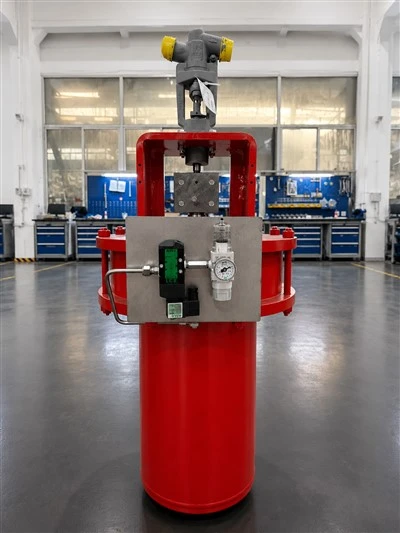
If you’re an automotive engineer, fleet manager, or parts designer weighing your options for linear motion components, I’ve spent the last 12 years working with OEMs and service fleets to build hydraulic linear actuators that meet their exact needs. I’ve seen them cut downtime, improve fuel efficiency, extend vehicle lifespan, and make drivers’ jobs easier. There’s no one-size-fits-all answer, but there is a solution for every application—you just need a supplier who understands both hydraulic technology and the unique demands of the automotive space. To learn more about how hydraulic linear actuators can work for your vehicle line or fleet, feel free to reach out to discuss your specific needs.
Scotch Yoke Actuator References:
- International Organization for Standardization (ISO). Road vehicles – Fluid power systems and components – Fluid compatibility. ISO 15001:2020.
- Society of Automotive Engineers (SAE). Commercial Vehicle Design Guidelines for Linear Actuator Systems. SAE J1926-1:2018.
- Automotive Industries Association. 2023 Global Commercial Fleet Vehicle Maintenance Cost Report.
- Hydraulic Institute. Linear Actuator Performance Specifications for Automotive and Industrial Applications. Hydraulic Institute Standard 12.5:2022.
Zhejiang Bigtork Valve Automation Co., Ltd.
Zhejiang Bigtork Valve Automation Co., Ltd. is one of the leading hydraulic linear actuator manufacturers and suppliers in China. We warmly welcome you to buy customized hydraulic linear actuator at competitive price from our factory. Contact us for more details.
Address: 98 Yuanqu Avenue,Anfeng Industrial Zone,Oubei,Yongjia,Zhejiang,China.
E-mail: sales@bigtork.com
WebSite: https://www.bigtork.com/
