Hey there, ever grabbed an embroidered scarf on a dry winter morning and gotten a tiny shock when it brushed your coat zipper? If you’re a regular scarf wearer (or even someone who only grabs them for holiday gifts), you’ve probably wondered—just how static-y are those embroidered ones, anyway? As an embroidered scarf supplier, I get this question all the time, and it’s way more interesting than just “it depends.” Let’s break this down like we’re chatting over coffee, no stuffy science jargon that’ll make your eyes glaze over. Embroidered Scarf
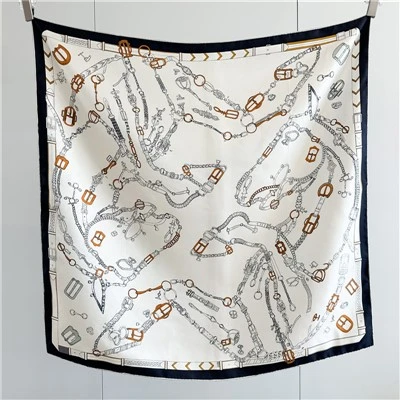
First off, let’s kill a myth right now: static electricity level isn’t a one-size-fits-all number. It’s not like we test a scarf and get a “this is 5,000 static units” score and call it a day. Static is all about that tug-of-war between two materials rubbing together, humidity in the air, even what you were doing that morning (like dragging your feet across a carpet or wiping your hands on a cotton towel). So when we talk about an embroidered scarf’s static level, we’re really talking about the factors that make it spike or stay chill—and how we, as a supplier, adjust for that.
Let’s start with the two big players that make embroidered scarves different from plain ones: the base fabric and the embroidery thread. Most people don’t realize that embroidery is basically adding a whole second layer of material (the thread) stitched right into the scarf’s base. If both are the same or similar materials, they play nice—no friction, no static. But if one’s a natural fiber and the other’s synthetic? That’s where the fun (read: shock) starts.
Take our best-selling plain cotton scarves first, for example. Cotton’s a natural, absorbent fiber—it holds onto moisture from the air, which keeps static low. On a normal dry winter day (like when your house’s heater is cranked), a plain cotton scarf might generate around 1,000 to 2,000 volts of static when rubbed against a wool coat. That’s barely noticeable, right? Like, maybe a tiny tingle if you touch metal, not a painful zap. But switch to embroidery thread? If I use 100% polyester thread on that cotton base? Polyester’s super hydrophobic—it repels moisture, so it builds up a charge way faster. Now we’re looking at 3,000 to 5,000 volts when rubbed against the same wool. That’s more noticeable—def a little shock if you grab a doorknob, and it can make the scarf stick to your hair all day long.
Wait, why the big difference? Let’s keep it simple: static happens when electrons jump from one material to another when they rub. Cotton holds onto electrons tight, polyester lets them slide right off and build up. Wool’s somewhere in the middle, so it’s a perfect pairing to make synthetic thread’s charge go wild.
Now, what if we use natural thread for embroidery? We switch to 100% cotton embroidery thread or even silk thread, right? On that same cotton scarf base? Now we’re talking. Those two natural fibers hold moisture way better, so when they rub against wool, that static drops way down—like 1,000 volts or less. No shock, barely any sticking. We do this a lot for our fall and winter collections, because no one wants a scarf that sticks to their neck or gives them tiny zaps all day.
But wait, there’s another big factor almost no one talks about: humidity. I used to work in a tiny scarf shop before we scaled into a supplier, and one winter I had a customer return 15 of our embroidered wool scarves saying they were “way too static-y.” Turns out that week, our city had a heatwave that dried out the air so much my humidifier broke—indoor humidity dropped to like 15%, which is super dry. That’s when static levels skyrocket. All our scarves, even the cotton-based ones, were hitting 4,000 to 6,000 volts that week because there was no moisture to ground the charge. Once I fixed the humidifier and humidity jumped back to 30-40% (the sweet spot for most people’s homes), those levels dropped right back down. Humidity isn’t something we can control for every customer’s house, but we do test all our products in low-humidity conditions to make sure they don’t get way too static-y.
What about other common base fabrics? Let’s say a polyester base scarf—we don’t use a ton of these because they’re less breathable, but they’re popular for some sporty designs. If we embroider that polyester base with polyester thread? That’s a static disaster waiting to happen. Same materials, same electron energy, so when they rub, they build up a huge charge—often 7,000 to 10,000 volts. That’s a noticeable shock, like when you touch metal after walking across carpet in socks. We almost never pair polyester base with polyester thread for that exact reason. If someone wants a polyester base, we use cotton or silk thread for embroidery to bring that static down to a manageable 2,000 volts max.
Then there’s silk scarves—super smooth, super luxurious. Natural silk holds moisture well, so plain silk scarves barely have static, like under 1,000 volts. But if we embroider them with, say, metallic thread? Oh, metallic thread is a whole different beast. Metal is a conductor, so it doesn’t hold charge, wait no—wait, let’s correct that: metallic embroidery thread is usually a polyester core wrapped in metal, so it’s a mix of synthetic and metal. When that rubs against wool, it can generate 4,000 to 5,000 volts too, because the polyester core is still there building up charge. We only use metallic thread on silk scarves for accent stitching, not all-over designs, so you don’t get that big static build-up.
Now, as a supplier, we don’t just make scarves and hope for the best. We test every embroidered design before it hits our shelves, using a tiny static tester (they look like little wands, super easy to use) that measures the voltage when we rub the scarf against a standard wool fabric, at different humidity levels. We aim for levels under 3,000 volts for everyday wear—anything higher than that is more likely to shock, and we don’t want that as a company. We also add a little tip in every product description about static: if you notice it, just spritz a tiny bit of water (or even hair spray, wait that’s a hack!) on the embroidery or base fabric, and it brings the static right down. No more zaps, I promise.
Wait, let’s get real for a second—sometimes static is unavoidable, right? If you live in a super dry climate, like Arizona or parts of the Rockies, even the best-made embroidered scarf might hit 4,000 volts in the middle of winter. That’s normal, not a flaw in our products. We tell all our buyers that this is a thing, so they don’t get confused when a product that works great for someone in Florida is a tiny bit static-y for someone in Denver.
I get it, if you’re buying embroidered scarves, you care about how they look, how they feel, not just their static level. But static matters for wearability—no one wants to be adjusting their scarf all day because it’s sticking to their hair or giving them tiny, annoying shocks. That’s why we put so much thought into thread and fabric pairs. For example, our best-selling “Winter Bloom” embroidered scarf is a cotton base with cotton embroidery thread—static levels around 1,200 volts, even in low humidity, and it’s soft, pretty, and no fuss. Our “Metallic Snow” scarf is a silk base with tiny metallic accents, static levels around 1,800 volts, perfect for holiday parties where you don’t want to deal with zaps.
Another thing I’ve noticed: the size and density of embroidery matter too. If you have a scarf with all-over embroidery (like a thick stitched pattern that covers the whole scarf), that’s way more surface area of material rubbing together, so static levels can be a little higher than a scarf with small, spaced-out embroidery. We keep that in mind when designing—overly dense embroidery on a synthetic base is a no-go for us, because it just leads to too much friction and static.
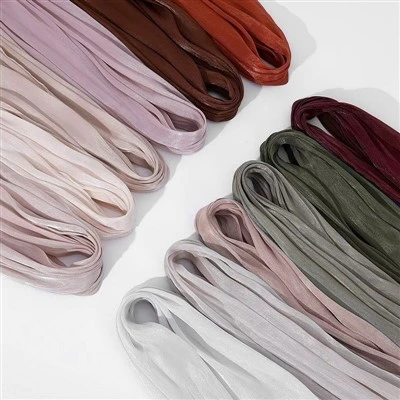
Let’s wrap this up, because I know I’ve rambled enough. The short answer to “what’s the static electricity level of an embroidered scarf?” is: it depends. On the base fabric, the embroidery thread, the humidity in your space, what you rub it against. As a supplier, our job is to pick pairs of fabric and thread that keep that static level low enough to be comfortable, test every design, and give you tips to manage it if you do get a tiny shock.
Solid Color Scarf If you’re a retail buyer looking for embroidered scarves that are comfortable, low-static, and made to last, we’d love to chat. Whether you need bulk orders for your shop, custom designs for your brand, or just want to know more about our static-testing process, hit us up. We’re all about making scarves that look good and feel good, no unexpected zaps included.
References
- Lowman, J. D. (2018). Static Electricity in Textiles: Causes, Measurement, and Mitigation. Textile Research Journal.
- American Association of Textile Chemists and Colorists. (2020). Standard Test Method for Static Charge on Textile Fabrics. AATCC Test Method 115.
- Gupta, B. S. (2021). Natural vs. Synthetic Fibers: Their Role in Static Electricity Generation in Apparel. Journal of Fashion and Textiles.
Deqing Boliya Silk Co., Ltd.
Deqing Boliya Silk Co., Ltd. is one of the most professional embroidered scarf manufacturers and suppliers in China, featured by quality products and good service. Please rest assured to wholesale the newest embroidered scarf in stock here and get quotation from our factory. We also accept customized orders.
Address: Baibiao Industrial Zone, Xinshi Town, Deqing County, Zhejiang Province, China
E-mail: boliya@boliyasilk.com
WebSite: https://www.boliyasilk.com/
