Hey there! As a supplier of Miniature Brushless Motors, I often get asked about the low – speed performance of these little powerhouses. So, let’s dive right into it and explore what the low – speed performance of a miniature brushless motor really means. Miniature Brushless Motor

What is Low – Speed Performance?
First off, low – speed performance refers to how well a motor operates when it’s running at relatively slow speeds. In the case of miniature brushless motors, this can be crucial for a whole bunch of applications. For example, in precision machinery, like small robots or medical devices, the motor might need to move at a slow, steady pace to perform delicate tasks.
When we talk about low – speed performance, we’re looking at a few key aspects. One of them is torque. Torque is the force that causes an object to rotate. At low speeds, a good miniature brushless motor should be able to maintain a consistent and sufficient amount of torque. This is important because if the torque drops off too much at low speeds, the motor might not be able to move the load effectively.
Another aspect is speed stability. A motor with good low – speed performance should be able to maintain a constant speed without significant fluctuations. This is especially important in applications where precision is key. For instance, in a 3D printer, the motor needs to move the print head at a precise speed to create accurate prints. If the speed varies too much, the quality of the print will suffer.
Factors Affecting Low – Speed Performance
Now, let’s take a look at what factors can affect the low – speed performance of a miniature brushless motor.
Motor Design
The design of the motor plays a huge role. The number of poles in the motor, for example, can impact its low – speed torque. Generally, a motor with more poles will have higher low – speed torque. However, more poles also mean more complexity in the motor’s design and potentially higher cost.
The winding of the motor is another important factor. The way the coils are wound can affect the motor’s electrical characteristics, which in turn can influence its low – speed performance. A well – designed winding can help the motor to generate more torque at low speeds and improve its overall efficiency.
Controller
The controller is like the brain of the motor. It’s responsible for controlling the speed and torque of the motor. A good controller can significantly improve the low – speed performance of a miniature brushless motor. It can adjust the current and voltage to the motor to maintain a constant speed and torque at low speeds.
There are different types of controllers available, such as sensor – based and sensorless controllers. Sensor – based controllers use sensors to detect the position of the rotor, which allows for more precise control of the motor. Sensorless controllers, on the other hand, are more cost – effective but might not provide the same level of precision at low speeds.
Load Characteristics
The load that the motor is driving also has an impact on its low – speed performance. If the load is too heavy, the motor might struggle to maintain a constant speed at low speeds. The inertia of the load, which is a measure of how difficult it is to change the load’s state of motion, can also affect the motor’s performance. A high – inertia load will require more torque to start and stop moving, which can be a challenge for the motor at low speeds.
Measuring Low – Speed Performance
So, how do we measure the low – speed performance of a miniature brushless motor? There are a few key metrics that we look at.
Torque – Speed Curve
The torque – speed curve is a graph that shows how the torque of the motor changes with speed. By looking at the torque – speed curve, we can see how much torque the motor can produce at low speeds. A flat torque – speed curve at low speeds indicates that the motor can maintain a relatively constant torque as the speed decreases.
Speed Regulation
Speed regulation is a measure of how well the motor can maintain a constant speed under different load conditions. It’s usually expressed as a percentage. A lower speed regulation percentage means that the motor can maintain a more constant speed, which is a sign of good low – speed performance.
Ripple
Ripple refers to the small fluctuations in torque or speed that occur as the motor rotates. At low speeds, ripple can be more noticeable and can affect the smoothness of the motor’s operation. A motor with low ripple at low speeds will provide a more stable and consistent performance.
Applications Requiring Good Low – Speed Performance
There are many applications where good low – speed performance of a miniature brushless motor is essential.
Robotics
In robotics, especially in small robots or robotic arms, the motors need to be able to move at slow and precise speeds. For example, a robot that is performing a delicate assembly task needs to be able to control its movements accurately. A miniature brushless motor with good low – speed performance can provide the necessary torque and speed stability for these types of applications.
Medical Devices
Medical devices often require high levels of precision. For example, in a syringe pump, the motor needs to drive the syringe at a very slow and constant rate to deliver the correct dosage of medication. A motor with poor low – speed performance could lead to inaccurate dosing, which can have serious consequences for the patient.
Camera Gimbals
Camera gimbals are used to keep a camera steady and allow for smooth movement. The motors in a camera gimbal need to be able to adjust the position of the camera at low speeds to provide a stable shot. Good low – speed performance ensures that the camera can be moved smoothly and precisely, resulting in high – quality footage.
Our Miniature Brushless Motors and Low – Speed Performance
As a supplier of Miniature Brushless Motors, we understand the importance of low – speed performance. That’s why we’ve put a lot of effort into designing and manufacturing motors that excel in this area.
Our motors are carefully engineered with the right number of poles and winding configurations to provide high torque at low speeds. We also use advanced controllers that can accurately regulate the speed and torque of the motor, even at low speeds.
We’ve conducted extensive testing on our motors to ensure that they meet the highest standards of low – speed performance. Our torque – speed curves show that our motors can maintain a consistent torque at low speeds, and our speed regulation is among the best in the industry.
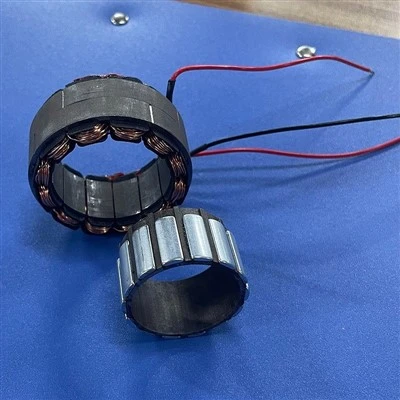
If you’re in the market for a miniature brushless motor with excellent low – speed performance, we’d love to hear from you. Whether you’re working on a robotics project, a medical device, or a camera gimbal, our motors can provide the performance you need.
Medical Brushless Motor Contact us to discuss your specific requirements and let’s work together to find the perfect motor for your application. We’re here to help you get the most out of your project.
References
- "Electric Motors and Drives: Fundamentals, Types and Applications" by Austin Hughes and Bill Drury
- "Brushless Permanent – Magnet Motor Design" by Larry J. Kirtley
Shenzhen HengDrive Technologies Co., Ltd.
Shenzhen HengDrive Technologies Co., Ltd. is one of the most professional miniature brushless motor manufacturers and suppliers in China, specialized in providing high quality customized service. We warmly welcome you to buy the newest miniature brushless motor in stock here from our factory.
Address: Building A & F, FuNing Hi-Tech Park, XinTian Road, FuHai Street, BaoAn District, ShenZhen, GuangDong Province, China.
E-mail: Marketing001@hengdrive.com
WebSite: https://www.hengdrivemotor.com/
