If you’ve ever turned on a kitchen tap, pumped air into a bike tire, or watched a factory safely move fluid from one tank to another, you’ve interacted with a valve. Most of the time, these small, often unassuming parts work out of sight—until something goes wrong. As a valve supplier who’s spent the last 12 years walking manufacturing floors, troubleshooting field issues, and sitting across tables from engineers trying to pick the right component for their line, I know one thing: valves aren’t just metal plugs. They’re the quiet decision-makers of every system that moves liquid, gas, or even slurry. Let me break down how they work, why that matters, and why picking the right one (for the job) isn’t just a nice-to-have—it’s non-negotiable. Valves

At their most basic, a valve’s job is simple: open to let flow pass, close to stop it, or throttle to control how much flow moves through. But the way they do that, and the materials they’re made from, changes entirely depending on what they’re handling. A valve for drinking water, for example, is built to resist corrosion and meet health standards, while one for a chemical plant might have to withstand extreme temperatures and caustic fluids that would eat through standard steel. The core mechanism of every valve boils down to two parts: a closure element (the part that sits in the flow path to block or open it) and an actuator (the part that moves the closure element). Actuators can be as small as a hand wheel you turn with your fingers, or as large as a motor that powers a 12-inch industrial valve at a refinery.
Let’s start with the most common type, because it’s what you’ll see on half the residential and commercial plumbing systems in the world: gate valves. I installed my first gate valve at 19, working for a small plumbing company in Ohio, and I’ll admit I thought they were straightforward back then. A gate valve uses a flat, wedge-shaped closure element that slides up and down into the flow path. When you turn the hand wheel, a threaded stem raises or lowers the gate. Open the valve all the way, and the gate sits fully above the flow line—so flow moves with almost no restriction, which is why gate valves are great for on/off control where you don’t need to adjust flow. The downside? They’re slow to open and close, and if you turn them too hard, you can strip the stem or damage the gate, leading to leaks over time. I still remember the time I had to replace a gate valve at a small apartment complex that a resident had cranked shut so tight the gate warped; by the time I got there, the basement was half-flooded. That’s the kind of on-the-job lesson that sticks: don’t underestimate how much force someone will apply to a valve they think will never leak.
Next up, ball valves—my personal go-to for most general-purpose applications, and the one we sell more of than any other at our company. Ball valves use a hollow, perforated metal ball as the closure element. When you turn the lever handle a quarter turn, the ball rotates 90 degrees: the perforation lines up with the flow path (open) or turns perpendicular to it (closed). That’s why they’re often called quarter-turn valves, and it’s why they’re so fast to operate. A quarter turn takes a second, compared to the 10 or more turns a gate valve needs. Ball valves create a tight seal when closed, too—many have a layer of PTFE (Teflon) around the ball that presses against the valve body, making them almost leak-proof. They work well for water, oil, gas, and even thin chemicals, and they’re compact enough to fit in tight spaces. I’ve installed ball valves on everything from backyard sprinkler systems to processing lines at a food and beverage plant, and I’ve only had to replace two in 10 years due to wear. The only downside? Because they’re a quarter-turn, they’re not great for precise flow control—if you want to adjust how much fluid is moving, a ball valve will either be open, closed, or somewhere in between, but it’s hard to get a steady, consistent flow mid-position. That’s where butterfly valves come in.
Butterfly valves are another quarter-turn workhorse, especially for large pipelines. Instead of a ball, they use a thin, round disc that sits in the middle of the pipe. A stem runs through the disc, and when you turn a gear or handle, the disc spins parallel to the pipe wall (open) or perpendicular (closed). Like ball valves, they open and close fast, and they’re lightweight and cheaper than gate or ball valves for pipes larger than 6 inches. They’re often used in HVAC systems, water treatment plants, and even marine applications. The trade-off here is seal quality: butterfly valves can leak more than ball or gate valves if the disc isn’t aligned correctly, or if the seal wears out. We once supplied a set of butterfly valves to a municipal water district that saved them 30% on installation costs, but they had to replace the seals every two years instead of the five-year lifespan we get on ball valves for similar lines. That’s the kind of trade-off we lay out for every customer before they place an order—no fine print, just real-world pros and cons.
If you need precise flow control, globe valves are your answer. These are the valves you’ll find on process lines where you need to adjust how much fluid moves, not just open or stop it. Globe valves have a spherical body, with a plug (the closure element) that sits against a seat inside the body. Turning the hand wheel moves the plug up and down, so you can pull it far away from the seat (full open), partway (to throttle flow), or all the way down (full closed). The design creates more resistance to flow than ball or gate valves, which is why they’re not ideal for full on/off use—they waste more energy pushing fluid through the curved body. But for applications like controlling steam pressure in a chemical plant, or regulating flow to a boiler, they’re unmatched. I worked with a team at a power plant three years ago that was using gate valves for flow control, which caused frequent pressure spikes and line wear. Swapping them for globe valves cut their maintenance costs by 40% in six months. It’s small differences like that that make all the difference for our customers.
There are dozens of other valve types, each built for a specific job. Check valves, for example, are the unsung heroes of every plumbing and industrial system—they stop flow from going backward. Think of them as one-way gates: when fluid flows in the right direction, it pushes a disc open; if it tries to flow backward, the disc slams shut to prevent backflow that could contaminate the main line or damage equipment. We supply check valves for everything from residential sump pumps to oil pipelines, and I’ve seen a well-designed check valve prevent millions in damage from a single power outage that cut off pump flow. Then there are diaphragm valves, which use a flexible rubber or plastic diaphragm as the closure element instead of a metal plug or gate. They’re perfect for handling corrosive fluids, slurries, or food products, because the diaphragm completely separates the moving parts of the valve from the fluid, so there’s no risk of contamination or the fluid getting stuck in crevices. We sold a set of diaphragm valves to a craft brewery last year that needed to transfer beer between fermentation tanks; they said the valves didn’t leave any residue, which helped them maintain their organic certification. That’s the kind of win that makes being a valve supplier worth it—we’re not just selling parts, we’re helping our customers meet their own goals, whatever they are.
One thing I want every customer to know is that a valve only works as well as the way you match it to your application. Too often, I hear stories from operators who grabbed a cheap gate valve for a high-temperature steam line, only to have it warp and leak in a month. Or a food plant that used a standard ball valve for syrup transfer, only to find that the thick syrup got stuck in the ball’s perforation, causing clogs and spoilage. That’s why we don’t just take orders—we ask questions: what fluid are you moving? What’s the temperature and pressure? Do you need to control flow, or just open/close? Is there any risk of contamination or backflow? We’ve got 10 years of field data, and we use that to guide our customers to the right valve, not the cheapest one.
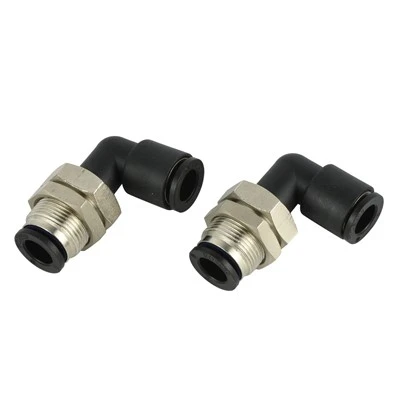
I also want to touch on a common misconception: valves don’t have to be super complex to be effective. The best valves are simple, reliable, and built to do one job well. I still repair old gate valves that have been in service for 40 years, with minimal maintenance. The same goes for a well-made ball valve—if you take care of it, don’t over-tighten the handle, and replace seals when they wear, it will last decades. At our company, we test every valve we ship, from the smallest 1/2-inch tap valve to the 24-inch industrial ball valves we supply to refineries. We pressure-test them, check for leaks, and make sure the closure element moves smoothly, because we know that when a valve fails, it’s not just the valve that’s broken—it can shut down an entire production line, cause costly repairs, or even create safety hazards.
Air Hose Connectors If you’re in the market for valves, whether you’re a plumber working on a home renovation, an engineer designing a new processing line, or a facilities manager maintaining a municipal water system, don’t leave your valve choice to chance. The right valve doesn’t just work—it works for your specific needs, for years to come. If you have questions about which valve is right for your application, or you need a quote for standard or custom valves, we’re here to help. Reach out to our team to discuss your project, and we’ll walk you through the options, no pressure, no confusing jargon.
- Valves: Design, Application, and Selection Guide. International Society of Automation, 2021.
- Fluid Power Circuit Design Handbook. Society of Manufacturing Engineers, 2019.
- Industrial Valve Technology and Maintenance. CRC Press, 2020.
- Plumbing and Mechanical Systems for Buildings. American Society of Heating, Refrigerating and Air-Conditioning Engineers, 2022.
- Process Control Valves: Selection and Sizing. ISA Press, 2018.
Yuyao Eshiong Pipe Fittings Technologies Co., Ltd.
Yuyao Eshiong Pipe Fittings Technologies Co., Ltd. is one of the most professional valves manufacturers and suppliers in China. With abundant experience, we warmly welcome you to wholesale bulk customized valves at competitive price from our factory. If you have any enquiry about free sample, please feel free to email us.
Address: No.263,North Yangshan Village, Lishan, Ditang Subdistrict, Yuyao ,Ningbo ,Zhejiang
E-mail: sales@trosung.com
WebSite: https://www.eshiongcn.com/
