If you’re in the stamping game, you know single stage dies are the unsung heroes of low-volume runs, prototype work, or quick turnarounds where gang dies just don’t make sense. For us—we’re the folks supplying both single stage and gang dies day in and day out—we’ve seen way too many buyers pick a die that looked good on paper, only to end up with jams, scrap, or something that didn’t fit their press. Today, I’m breaking down the actual factors we walk through with every customer before they pull the trigger on a single stage die, no stuffy industry jargon, just real-world stuff that’ll save you time and cash. Single Stage Dies & Gang Dies
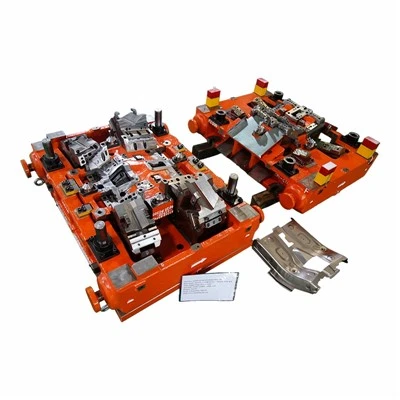
First off, let’s cut to the chase: what even is a single stage die? It’s a tool that does one specific stamping operation—blanking, piercing, bending, drawing, whatever—all in one press hit. Unlike gang dies, which cram 5+ operations into one tool for high-volume production, single stage dies are built for smaller batches, custom parts, or testing a new design before you invest in a more complex setup. So if you’re only making 500 parts for a prototype or a niche order, single stage is usually your call. But picking the right one? That’s where people mess up.
The first thing we always talk about is the material you’re stamping. Sounds basic, right? But so many customers skip this. If you’re running thick, hard material like 10-gauge steel, you can’t use the same die as someone stamping 24-gauge aluminum. Wait, no—let me rephrase: if you ignore material specs, you’ll go through punches and dies way too fast. We had a customer last month who tried to use a cheap steel die for stamping 12-gauge stainless; after 100 parts, the punch was bent and the die cavity was worn smooth. That’s $800 in parts wasted, plus downtime to fix the tool. Here’s the rule: hard materials need hardened tool steel components (like D2 or A2 steel for punches/dies), while soft aluminum or copper can get by with milder steel to keep costs down. Also, if you’re stamping something with a tricky finish, like a polished copper connector, you need a die that won’t scratch the material—we’ve adjusted die surface finishes for customers before, and that small tweak makes a huge difference in part quality.
Next up: your press. This is the #1 mistake people make when selecting a single stage die. They pick a die that looks right for their part, then try to cram it into a press that’s too small or too weak. Let’s break it down: die size first. If your press has a bed size of 24” x 36”, you can’t install a die that’s 28” x 40”—duh, right? But we’ve had customers send us a part drawing, pick a die, and forget to check the press’s maximum die dimensions. Even if the die fits, the press’s tonnage is non-negotiable. Every stamping operation needs a certain amount of force: blanking thick steel needs more tonnage than bending thin aluminum. If your press is rated for 20 tons, don’t buy a die that needs 25 tons to run. It’ll either slip, damage the press, or produce garbage parts. We always ask customers for their press specs before we even quote a die, because modifying a die to fit a weak press is way harder (and more expensive) than just picking the right one upfront. Also, check the press’s shut height—how much space is between the ram and the bed when the press is fully closed. If the die is taller than that, you can’t run it, no matter how good it is. We once had a customer who’d ordered a die from another supplier, realized the shut height was wrong, and ended up paying $1,200 to have the die milled down. That’s a cost no one needs.
Then there’s the part itself—its complexity and tolerance requirements. Single stage dies are versatile, but they have limits. If your part needs 0.005” tolerance on a hole, you need a die with precision-ground components, not a cheap die that’s cut with a router. For simple parts, like a flat blank with two holes, a standard single stage die works great. But if your part has multiple bends, deep draws, or intricate features, you have to make sure the die can hold those tolerances. We once worked with a medical device maker who needed a part with a 0.003” tolerance; their first die from a cheap supplier was off by 0.01”, so they came to us to make a new one. The difference? We used CNC-machined die plates and precision-ground punches, so every part came out to spec on the first run. Also, think about part volume here. If you’re making 10,000 parts, the die needs to be built for durability—thicker plates, harder components. If you’re only making 200 for a prototype, you can go with a lighter, cheaper die that’s easier to adjust. No point in overbuilding a tool you’ll only use once.
Adjustability is another big one that people overlook. Single stage dies aren’t always set-it-and-forget-it. Sometimes you’ll need to tweak the clearance between the punch and die for different material thicknesses, or adjust the ram height if the parts aren’t coming out right. If your die has zero adjustability—say, it’s a fixed-setup die—you’ll be stuck if you need to make even a small change. We build most of our single stage dies with adjustable stripper plates and punch holders, so you can make quick tweaks without taking the whole die apart. That saves so much time when you’re running low-volume orders and don’t want to shut down production for hours to fix a small issue. We had a customer who ran a die without adjustability; when their supplier sent the wrong thickness steel, they had to reorder the whole die to accommodate. If they’d had an adjustable die, they could’ve just shimmed the stripper plate and kept running.
Cost is obviously a factor, but don’t let it be the only factor. I know, I know—everyone wants the cheapest die possible. But here’s the thing: a $500 die that breaks after 500 parts is way more expensive than a $800 die that lasts 5,000 parts. We see this all the time. A startup we worked with tried to buy a super cheap single stage die for their phone case parts; it lasted 300 parts, and they had to make 10,000 total. That meant 30 die changes, downtime, and lost revenue. When they switched to our die (which was 60% more expensive upfront), they ran 12,000 parts without any issues. We always tell customers to think long-term: what’s the total cost of ownership, not just the price tag. Also, don’t forget about lead time. If you need a die in 2 weeks instead of 8, the cheaper supplier might take longer, or cut corners to meet the deadline. We have flexible lead times, and we can rush a die if you need it—something a lot of smaller suppliers can’t do.
Another thing: ejection and part handling. How will the parts come out of the die? If you’re stamping a small, flimsy part, it might stick to the punch, so you need a die with an automatic ejection system—like air jets or a spring-loaded stripper. If you’re stamping a thicker, rigid part, you might just need a simple knockout pin. If you skip this, you’ll spend half your day picking parts off the die, which kills productivity. We always ask customers how they want parts ejected, because that’s a cheap add-on that makes a huge difference on the shop floor. Last quarter, a customer added air ejection to their die, and their operator said it cut part handling time by 75%. That’s not a small win.
Wait, let’s also talk about repeatability. If you’re making parts that need to be consistent, every time, the die has to be built to tight tolerances so that each part is identical. Cheaper dies often have inconsistent clearances, so one part is slightly off, the next is too big, and you end up with a lot of scrap. We do trial runs on every single die before it ships, so we can test 50+ parts and make sure they’re all within tolerance. That way, you don’t have to waste time testing it on your press—we’ve already worked out the kinks. We’ve had customers come back to us because another supplier’s die had 10% scrap rate, and ours has a 1% scrap rate. That’s a massive difference for your bottom line.
Oh, and don’t forget about future needs. If you think you might ramp up production later, or need to modify the part, pick a die that’s easy to adjust. If you build a die that’s only good for one specific part, you’re stuck if the design changes. We make our single stage dies with modular components, so if a customer later wants to add a bend to their part, we can swap out a few parts instead of building a whole new die. That saves them thousands and a ton of time. We had a customer who started with a 500-part prototype run, then needed to make 10,000 parts 6 months later. Their old die from another supplier couldn’t handle the higher volume, so they upgraded to a more durable version, but if they’d picked a modular die from us, they could’ve just reinforced it. It’s all about planning ahead.
Let me wrap this up: when you’re picking a single stage die, don’t just look at the price or the part drawing. Check the material you’re stamping, your press’s specs, the part’s complexity and tolerance, adjustability, total cost of ownership, ejection, repeatability, and future needs. We’ve been supplying single stage and gang dies for years, and these are the exact factors we walk through with every customer to make sure they get a die that works for them, not just a die that fits.
Single Stage Dies & Gang Dies If you’re in the market for a single stage die, don’t waste time guessing—reach out to us to discuss your project. We’ll ask you all the right questions to make sure you get a die that’s built for your press, your material, and your production needs, no surprises, no headaches. We’re here to help, whether you need a prototype die, a short-run die, or something for a larger batch. We can’t wait to talk through your project with you.
References
- Stamping Die Design Handbook, Society of Manufacturing Engineers, 2021
- "Single Stage vs. Gang Dies: A Guide for Low-Volume Stamping", Metal Forming Magazine, 2023
- Tool Steel Selection Guidelines for Stamping Applications, American Iron and Steel Institute, 2022
Dongguan Changdong Tool & Die Co., Ltd.
With abundant experience, we are one of the most reliable single stage dies & gang dies manufacturers and suppliers in China. Please feel free to buy advanced single stage dies & gang dies made in China here from our factory. Good service and quality products are available.
Address: No. 56-B, Fumin South Road, Dalang Town, Dongguan City, Guangdong Province, China
E-mail: sales@stamping-die.com
WebSite: https://www.metalstampingdie.com/
