If you’ve ever found yourself mid-drive, minding your own business, only to be met with that relentless, high-pitched chime and a glowing red seatbelt warning light, you’re not alone. As someone who’s spent the last eight years running a small car seatbelt supplier, I’ve lost count of how many times drivers have asked me: “Can I just turn that stupid light off?” Car Seatbelt
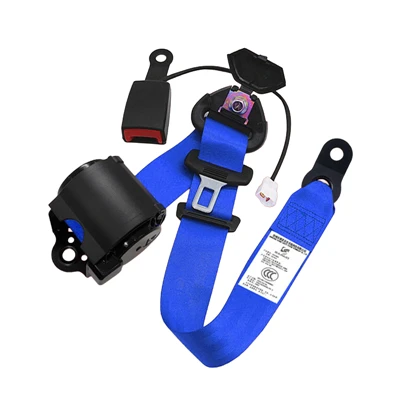
At first glance, it seems like a simple question. The warning is annoying, it can startle you when you’re trying to merge, and some cars even disable the radio until you fasten your seatbelt. But digging into this isn’t just about turning off a light—it’s about understanding why that light exists, what happens if you bypass it, and whether there’s a responsible way to adjust it if it’s truly a problem for your daily drive.
Let’s start with the basics: why that seatbelt warning system is there in the first place. Back in the 1980s, the National Highway Traffic Safety Administration (NHTSA) pushed for mandatory seatbelt reminder systems in all new passenger vehicles. The goal was simple—reduce seatbelt non-use, which at the time hovered around 14% nationwide in the U.S. (and even higher in many other countries). Studies at the time showed that visual and auditory reminders increased seatbelt use rates by up to 30% in new cars, saving thousands of lives every year. Today, seatbelts are estimated to save over 15,000 lives annually in the U.S. alone, and that warning light is a big part of that.
From an engineering standpoint, that system is a small, clever piece of tech. Most modern cars use a weight sensor in the front passenger seat to detect if someone is sitting there—think of it as a little pressure pad under the seat cushion. When the car starts, the system checks: is there a person in the front seat? If yes, is their seatbelt buckled? If not, the light turns on and the chime sounds. Some cars have different settings for the driver’s seat too, though that’s less common because so many people will drive alone and forget to buckle up.
Now, here’s where the question of turning off the light gets complicated. First, you have to ask: why do you want to turn it off? Is it because you forgot your seatbelt, and the reminder is annoying? Or is there a legitimate reason your seatbelt isn’t functional, making the light a constant frustration? That’s a distinction every driver needs to make before doing anything.
I’ve had customers come to me over the years with a variety of “annoyance” issues. A delivery driver who makes 20 stops a day, buckling and unbuckling every single time—their warning light and chime would go off every time they pulled away from a stop sign, which got old fast. A parent who takes their kids to soccer practice, always moving things around in the back seat, and the front seat warning would trigger if they left a heavy bag on the passenger seat. A college student who leased a car and thought the light was a minor cosmetic flaw. These are all relatable frustrations, but they’re different from a real problem with the seatbelt system itself.
The first thing many people try is a “cheap fix” to turn off the light: inserting a metal clip or a fake seatbelt buckle into the receiver. Let’s be clear right now—this is a terrible idea, for two big reasons. First, it disables the entire seatbelt reminder system, which means if you get into an accident, you and anyone riding in that seat are not wearing a seatbelt. The NHTSA has consistently found that seatbelt non-use doubles the risk of fatal injury in a crash. Second, that little receiver is part of the car’s safety system that sends a signal to the airbag control module. If you bypass it with a fake buckle, the airbag might not deploy correctly in a crash, or might deploy when it’s not supposed to. I’ve seen too many cases where someone tried this and ended up with a faulty airbag warning light, or worse, an airbag that failed to deploy during a fender bender.
As a seatbelt supplier, I’ve also seen the damage that comes with these quick fixes. A few years back, a customer brought in his car after he used a metal clip to turn off the passenger seat light. During a minor crash on the highway, the airbag didn’t trigger, and he ended up with a broken arm that could have been avoided. The clip had shorted out the airbag sensor, which is connected directly to the seatbelt receiver. That’s when I realized how important it is to not just sell seatbelts, but educate drivers about the real risks of tampering with these systems.
But that doesn’t mean there’s never a safe way to adjust the warning light. Let’s talk about legitimate scenarios where the light is a problem, not a reminder. For example, if your car’s seatbelt receiver is broken—if the latch won’t catch, or the sensor isn’t detecting that the seatbelt is connected. I get at least a dozen calls a month from people whose seatbelt receiver has stopped working, so the light stays on even when they buckle up. That’s a real mechanical issue, not a choice to ignore safety, and turning off the light in that case is actually fixing a problem with your car’s safety system.
Another scenario: if you rarely use the front passenger seat. For some people, the passenger seat is only used for groceries, or rarely at all, and the warning light triggers every time you start the car for no reason. Or if you have a child car seat installed in the front seat (though most of the time, child car seats are recommended in the back for safety). In that case, the weight sensor might detect the car seat and trigger the light, even though no adult is sitting there.
So what’s the alternative to hacking the system? The good news is that modern cars have settings built into their onboard computer (OBD) that let you adjust the seatbelt warning sensitivity, or even turn off the passenger side warning entirely—safely. But here’s the catch: you can’t do this with a $10 fake clip. You need a professional who knows how to access the car’s OBD system without tampering with critical safety functions.
I’ve worked with automotive technicians and OBD specialists over the years to develop a few safe solutions for these issues. For example, if your passenger seat is rarely used, a technician can adjust the weight threshold in the car’s computer so that small items (like grocery bags, purses, or even a child car seat) don’t trigger the warning. If your seatbelt receiver is broken, we supply genuine, OEM-quality seatbelt receivers that are designed to work with your car’s existing safety systems, so you don’t have to worry about disabling airbags or other critical functions.
Wait, let’s get back to the original question: can you turn off the seatbelt warning light? The short answer is yes—but only if you do it safely, without compromising your safety or the safety of others. Tampering with the system with a fake buckle or other makeshift fix is not safe, and it’s also against most car insurance policies and leasing agreements. If you get into an accident, and it’s found that you disabled the seatbelt warning system, your insurance could deny your claim, and you could face legal consequences.
I want to be clear: I’m not saying the warning light is perfect. I get it—it’s annoying, especially when it goes off for no reason, or when you’re making frequent stops for work or school. But the people behind that system didn’t design it to nag you. They designed it to save lives. The numbers don’t lie: over the last 30 years, seatbelt use rates have gone up by 15% in the U.S., and that’s directly tied to these warning systems.
That said, I also know that sometimes, the light itself is a problem. If your seatbelt is broken, if the receiver is faulty, if you have a car seat that triggers the warning unnecessarily—those are issues that need to be addressed, not just ignored. As a seatbelt supplier, my job isn’t just to sell seatbelts. It’s to make sure that when you need a replacement part, it works as well as the original, and that it doesn’t compromise your safety.
So here’s my advice if you’re dealing with that seatbelt warning light: first, ask yourself why it’s on. If it’s because you’re not wearing your seatbelt, that’s a reminder you should listen to. If it’s because the system is broken, or triggering unnecessarily, don’t reach for a fake buckle. Instead, contact a trusted automotive technician, or reach out to a reputable seatbelt supplier like ours. We can help you find a genuine part that will fix the problem without disabling safety systems, or connect you with a professional who can adjust the warning settings safely.
I’ve seen too many drivers make the mistake of cutting corners to turn off that light, only to regret it later. A friend of mine who drives a delivery van tried a fake buckle, and during a crash, his airbag didn’t deploy. He ended up with a concussion that kept him out of work for two months, and his insurance didn’t cover the medical bills because they found out he had disabled the seatbelt system. That’s a story I’ll never forget, and it’s why I’m so passionate about talking about this issue.
At the end of the day, the seatbelt warning light isn’t the enemy. It’s a tool designed to keep you safe. But if it’s not working right, or if it’s causing unnecessary frustration, there are safe ways to fix it. Turning it off with a cheap clip or a makeshift fix isn’t one of them.

If you’re dealing with a faulty seatbelt receiver, a warning light that won’t turn off, or you need a genuine replacement part for your car’s seatbelt system, we’re here to help. We supply high-quality, OEM-compatible seatbelt components that meet all safety standards, and our team can guide you through the right solution for your vehicle. Contact our team to discuss your needs, and we’ll work with you to find a safe, reliable fix for your seatbelt warning issue.
GM Seatbelts References:
National Highway Traffic Safety Administration. (2022). Seat Belt Use: 2022 Nationwide Estimates. U.S. Department of Transportation.
Insurance Institute for Highway Safety. (2021). Seat Belt Warning Reminders Reduce Non-Use. IIHS Research Report.
Society of Automotive Engineers. (2019). Safety Standards for Occupant Restraint Systems. SAE International.
Yangzhong Weian Mechanical and Electrical Co., Ltd.
As one of the most professional car seatbelt manufacturers and suppliers in China, we’re featured by quality products and good service. Please rest assured to wholesale car seatbelt in stock here and get quotation from our factory. Customized orders are welcome.
Address: Group 10, Xinhua Village, Xilaiqiao Town, Yangzhong City; West of The Bus Terminal On Yuanqu Avenue.
E-mail: hfsaml_2008@qq.com
WebSite: https://www.weianseatbelt.com/
