Hey there, if you’re here, chances are you’re either running a rotary kiln right now, troubleshooting a fuel mess, or maybe even in the market for a new kiln and trying to wrap your head around fuel choices — same vibe I get all the time from clients reaching out to my team (we’re a rotary kiln supplier, by the way, so this is stuff we’ve tested, tweaked, and field-proven over hundreds of projects). Let’s cut the corporate jargon and get real, because picking the right fuel for your rotary kiln isn’t just about grabbing the cheapest stuff on the shelf — it’s about keeping your kiln running smooth, hitting those production targets, and not blowing your maintenance budget. I’ve seen way too many folks skip the basics and end up with clinker that’s off-spec, flame instability, or even a cracked refractory because they picked the wrong fuel. Let’s break this down like we’re chatting over a coffee, no fancy textbooks required. Rotary Kiln
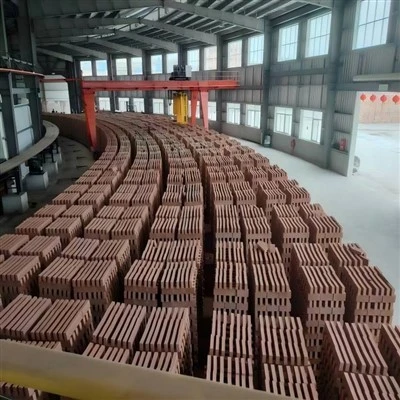
First off, let’s remember what a rotary kiln actually does, because that shapes every fuel choice you make. Whether it’s for cement, lime, minerals, or waste incineration, the kiln’s whole job is sustained, high-heat, uniform combustion inside that rotating cylinder. The flame needs to be hot enough to get the material to its reaction point (clinkering temp for cement is like 1450°C, right?), but it also needs to be well-defined so it doesn’t burn the refractory lining unevenly (refractories are expensive, replacing them is a pain — trust me, I’ve had clients skip this and pay 2x later). So fuel selection ties directly to heat output, flame characteristics, and combustion efficiency, all of which play into your end product quality and operational costs.
Now, let’s talk about the main fuel types we see clients use, and the pros, cons, and gotchas of each — this is the stuff we walk through with every new client, because no two operations are the same.
Starting with the big one for a lot of heavy industry: coal (or pulverized coal, to be exact). Coal’s been the go-to for rotary kilns for decades, and it makes sense — it’s cheap in regions with abundant coal reserves, has a high energy density (more BTU per pound than a lot of other fuels), and can produce a dense, long flame that’s perfect for large cement kilns. But here’s the catch: not all coal is created equal. You can’t just dump any old bituminous coal into your pulverizer. For rotary kilns, you want coal with a low moisture content (under 10% is ideal), low ash content (high ash means more leftover residue that can foul burners and coat kiln internals, plus ash that’s off-spec for your product), and a volatile matter content between 20-30% — that’s what gives you a stable, adjustable flame. If your coal has too little volatile matter, it burns too slow, leading to incomplete combustion and wasted heat. Too much, and you get a short, sharp flame that can burn the refractory or overheat the material’s surface before the core is ready. I had a cement client last year who switched to cheap, high-volatile subbituminous coal to save money, and within three months they had to replace a third of their refractory because of flame impingement. Total rookie move. Also, if you’re worried about emissions, coal can have high NOx and SO2 levels if not burned right, so you need proper emission controls — something we factor into our kiln designs too, by the way, to make fuel transitions easier.
Next up: natural gas. This is the fuel we’re seeing more and more clients lean into lately, especially in regions with access to pipeline gas. It’s way cleaner than coal — lower emissions, no ash, so less fouling of burners and kiln internals, which means less maintenance. Combustion is super efficient too, so you get almost all the heat you pay for, no wasted energy on unburned residue. The flame from natural gas is adjustable, too — you can dial it from a long, lazy flame for large kilns to a shorter, hotter flame for smaller operations. But here’s the thing: natural gas is way more dependent on fuel supply infrastructure than coal. If your plant is in a remote area with no pipeline, you’re looking at LNG (liquefied natural gas) or compressed natural gas, which adds a huge upfront cost for storage and vaporization equipment — that can erase any fuel cost savings right away. Also, natural gas has a lower energy density per unit volume than coal, so you might need higher flow rates to hit the same heat output, which means bigger burners and more energy to compress or move the gas. I worked with a lime kiln operator out in West Texas a few years ago who switched to natural gas to meet new emission rules, but they didn’t factor in the cost of building a pipeline 15 miles to their site — they ended up regretting it until we helped them adjust their burner size to work with smaller gas flow.
Then there’s fuel oil, especially heavy fuel oil (HFO) and diesel. Fuel oil was a staple back when we first started building kilns, and it’s still used in places where natural gas isn’t available and coal processing is too much of a hassle. Heavy fuel oil has super high energy density, so you can get a lot of heat out of a small volume, which is good for smaller kilns or operations with limited storage space. But again, downsides: HFO has high ash and sulfur content, so emissions are worse than natural gas, and it’s messy to handle — you need heating systems to keep the oil from gelling, which adds energy costs. Also, the flame from HFO can be inconsistent if the oil viscosity isn’t regulated properly, leading to uneven heat. We had a small refractory kiln client a couple years ago who tried switching from diesel to HFO to save money, but their flame kept wavering because they didn’t have the proper heating for the fuel lines, and their refractory wear went up 20% before we helped them adjust their fuel handling system.
And lately, we’ve been seeing more and more interest in alternative fuels — waste-derived fuels, biomass, RDF (refuse-derived fuel), even plastic waste. That’s a big one, especially for operations looking to cut emissions or turn waste into a profit stream. The upside here is obvious: alternative fuels are often cheaper than traditional fossil fuels, and they help reduce landfill waste. But they’re not a plug-and-play option. For rotary kilns, alternative fuels need to have consistent energy content (no one wants a fuel that’s half wet wood and half plastic one week, then all wet wood the next), low moisture, and low chlorine and heavy metal content — those can cause corrosion in the kiln and emissions issues. I worked with a large cement producer in Europe who switched to RDF for 30% of their fuel, and they saved like $2M a year on fuel costs, but they had to upgrade their burner to handle the variable fuel size and add a filter for heavy metals, which was a upfront cost, but worth it in the long run.
Okay, so now that we’ve covered the main fuel types, what actually matters when you’re choosing, beyond just BTU content? Let’s get into the actionable stuff, the stuff we go over with every client before they sign on.
First, match fuel to your kiln’s size and application. A small, 50 tph lime kiln doesn’t need the same fuel as a 500 tph cement kiln. Small kilns benefit from higher energy density fuels like HFO or diesel because they don’t need massive fuel flow rates to hit high heat. Large cement kilns need a steady, high-heat fuel with adjustable flame length, which is why coal or natural gas works so well for them — their burners are built to handle that volume. Also, what are you producing? If it’s a product that’s sensitive to impurities (like high-purity lime for agriculture or metallurgy), you can’t use a fuel with high ash or heavy metals — natural gas or even clean biomass is the way to go, because they won’t contaminate your end product. I had a metallurgical lime client who was using coal and found that small ash particles were getting trapped in the lime, ruining their batches for steel manufacturing. We helped them switch to natural gas, and their reject rate dropped to almost zero.
Second, look at your local supply chain and long-term price stability. This is huge — a fuel that’s cheap today might be 3x more expensive next year if supply is disrupted. Coal prices go up and down based on global markets, natural gas depends on pipeline access, alternative fuels depend on local waste regulations. We always ask clients to do a 5-year fuel price forecast, not just the current spot price. For example, a client in India who was looking at coal vs. natural gas — coal was cheaper right now, but natural gas pricing was locked in for 10 years, while coal prices had risen 40% in the last two years. They went with natural gas, and it’s saved them way more than if they’d gone with coal. Also, what’s your storage capacity? If you’re in an area prone to supply disruptions (like remote mining sites), you need a fuel that you can store for a long time without degrading. Coal is great for that — it can sit in storage for months as long as it’s dry. Natural gas or fuel oil needs specialized storage, so that’s a factor too.
Third, emissions compliance and regulatory rules. This is non-negotiable in almost every country now. If you’re in the US, EU, or even many developing nations, there are strict limits on NOx, SO2, particulate matter, and heavy metals. Coal can be hard to meet those limits without expensive emission controls, while natural gas and low-sulfur fuels are way easier. Alternative fuels can be a double-edged sword here — you can hit emission targets if you process them right, but if they have high chlorine or heavy metals, you might end up with extra compliance costs or fines. We work with all our clients to map their local regulations early, so we can recommend a fuel and kiln setup that checks all the boxes without breaking the bank on retrofits later.
Fourth, burner compatibility — this is something a lot of people overlook. Even if you pick the perfect fuel, if your burner isn’t designed for it, you’re gonna have problems. If you’re switching from coal to natural gas, you can’t just slap a gas nozzle on your old coal burner — you need a burner that’s sized for the new fuel’s flow rate and combustion characteristics. We design all our rotary kiln burners to be flexible, actually, so clients can switch between fuels down the line if their needs change, which is a big plus. I had a client who wanted to switch to alternative fuels a couple years after installing our kiln, and because our burner was adjustable, they only had to swap a few parts, not the whole burner — saved them like $50k.
Wait, let’s also talk about some common mistakes I see all the time, because that’s stuff you don’t hear in sales pitches. First, chasing the lowest upfront fuel cost without considering hidden costs. Like, that cheap coal might be $10 cheaper per ton, but it has 20% ash content, so you’re paying for extra ash disposal, more frequent burner cleanings, and faster refractory wear — that adds up to way more than the savings on fuel. Second, not testing fuel before switching. A lot of clients just switch fuels based on a quote without doing a small-scale test or a trial run with their kiln. We always recommend a 2-week trial run with any new fuel, adjusting burner settings and combustion air rates to make sure the flame is stable and heat is uniform. Third, ignoring maintenance costs. A fuel that’s low in impurities might mean less downtime, but if it requires specialized handling (like natural gas needing leak checks every week), that adds labor costs. It’s all about the total cost of ownership, not just the fuel price.
Let me wrap this up with a quick example of a client we worked with last year, just to make it real. They had a 300 tph cement kiln, were using coal, but their local emissions rules got stricter, and coal prices had jumped 30% in a year. They were considering switching to natural gas or RDF. We did a full audit: their kiln was designed to handle flexible fuels, their local natural gas price was locked in for 7 years, and RDF had variable quality in their area. We recommended a 60% natural gas / 40% RDF blend — that let them cut their fuel costs by 18%, meet all emission limits, and didn’t require a full burner retrofit. They did a trial run, tweaked the air-to-fuel ratio a little, and now their production is up 5% because the flame is more uniform, and their refractory life is up 12%. That’s the sweet spot, right? Balancing cost, compliance, and performance.
At the end of the day, choosing the right fuel for your rotary kiln isn’t a one-size-fits-all decision. It’s about matching your kiln, your product, your local infrastructure, and your long-term goals — not just grabbing whatever’s cheapest today. If you’re in the middle of weighing options, or you’re dealing with inconsistent performance from your current fuel, my team is here to help. We don’t just sell kilns — we walk through every step of fuel selection, do audits, run trials, and make sure your setup works for you, not just for our sales sheet. No pressure, no fancy jargon, just straight talk and real advice that’s been tested in the field.
If you want to sit down and chat through your specific setup, or even run a quick fuel feasibility test, just reach out. We’re here to help you avoid the mistakes I’ve seen hundreds of clients make, and get your kiln running at peak efficiency.
Tunnel Kiln References:
- Perry, R. H., & Green, D. W. (2008). Perry’s Chemical Engineers’ Handbook (8th ed.). McGraw-Hill.
- Smith, P. (2012). Rotary Kilns: Design, Operation, and Troubleshooting. Industrial Press Inc.
- International Energy Agency. (2021). Industrial Fuel Use for High-Temperature Processes. IEA Publications.
- Cement Americas. (2020). Alternative Fuel Adoption in Global Cement Manufacturing. Cement Americas Magazine.
Henan Yaxin Kiln Co., Ltd.
Henan Yaxin Kiln Co., Ltd. is one of the most professional rotary kiln manufacturers and suppliers in China. With abundant experience, we warmly welcome you to buy high quality rotary kiln with the latest design from our factory. Good service and punctual delivery are available.
Address: Jixian Industrial Zone, Shangqiu City, Henan Province
E-mail: 1543563178@qq.com
WebSite: https://www.hnyxkiln.com/
